
Den Interaktiven Geländeplan 2026 finden Sie hier.
DKC Solutions: Robust infrastructure for cloud transformation

DKC Solutions: Robust infrastructure for cloud transformation

Beschreibung
The rapid evolution of cloud information services has a direct and immediate impact and represents a change in pace in data centre design. This is an unavoidable change, a change brought about by the need for this type of IT infrastructure to manage ever higher power density, to support large-scale installation and to adapt to new forms of cabling. All of this requires the adoption of open and modular solutions for flexible data centre design. It also requires the obligation to guarantee non-stop accessibility to the stored data, as well as simultaneously ensuring maximum reliability in protecting the data. If it is true that the "cloud" represents one of the most sophisticated forms of digitisation of the dynamics of an organisation, large or small, it is also true that the correct operation of a data centre requires optimal cable laying. This must be carried out with the maximum care to ensure uninterrupted and reliable quality of the signals conveyed.
Digitisation starts from the ground, from the building blocks of a production facility. It then reaches the cloud, the place where the most valuable data and information is stored. Digitisation is not just a matter of software and intangible services: at its core are physical infrastructures capable of ensuring the constant and secure flow of data. Cables must be laid, protected and managed in such a way that information can flow without interruption.
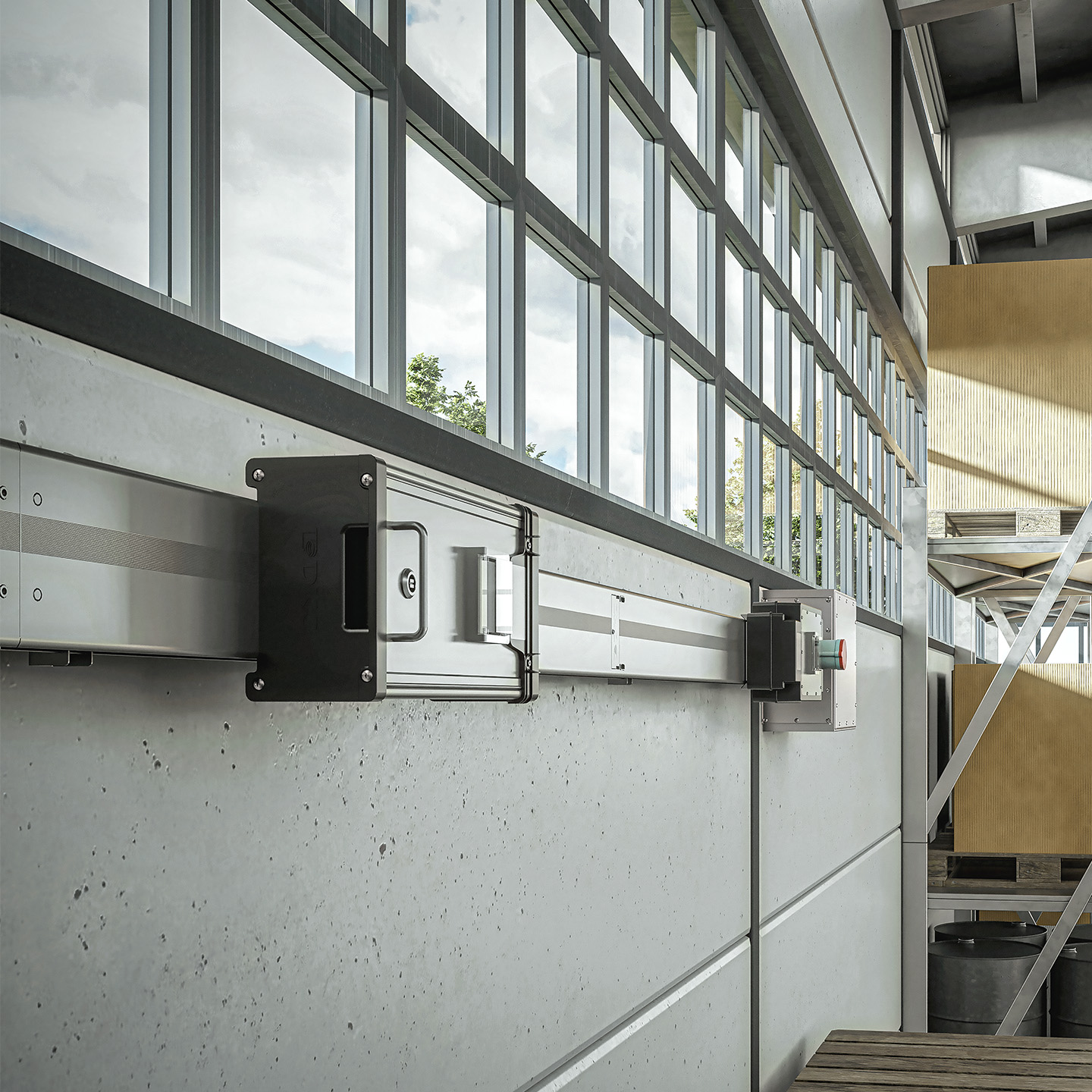
It is precisely in this regard that DKC comes into play, demonstrating its ability to meet the most complex and challenging requirements, accompanying this change with its advanced Combitech Line solutions and participating in the construction of five data centres with more than 30,000 metres of ducting. The ducting systems, made of durable sheet metal and designed to adapt to the needs of modern data centres, form the physical foundation on which the entire digital architecture rests. The Combitech C5 line, with its innovative interlocking system, the F5 flush-mounted cable tray, thanks to its innovative head wire, guarantees maximum protection for the cables inside it. Lastly, the L3 ladder-type cable tray, thanks to its sturdiness and ease of installation, represents an effective solution for IT infrastructure management.
The rectilinear elements of the C5 Combitech series feature an original interlocking system achieved through a special shaping of the ends, created by deep drawing during the sheet metal bending phase. Thanks to this, the use of linear joints is extremely limited. It should be emphasised that all accessories of DKC's C5 Combitech series are prepared for interlocking in the 'female' ends of straight elements. In addition, thanks to continuous edging on the sides, all covers of the C5 series can be snapped onto their components without the need for screws. Electrical continuity is always guaranteed thanks to an embossed area on the female part of the joint of all C5 series components. This reduces the number of components to be installed even further.
Through its own Combitech Line, DKC offers the ZC flush-mounted cable tray, equipped with an innovative metal coating obtained by post-bending hot-dip galvanising in highly controlled baths to ensure the best possible corrosion resistance. This process has been performed in-house for many years now, at the DKC Group Latina plant. The distinctive feature of the F5 series products is the butt-welded wire, which completely eliminates sharp protrusions that could damage cables or injure the operator during installation. Furthermore, the ribbing on the side of the channel, designed to bring all the other longitudinal wires on the edge to the same level as the top wire, gives the straight element greater load-bearing capacity. Lastly, no accessories are required to make the shunts as these are made by truncating the cable tray wires, giving the product the necessary shape.
Another possibility provided by DKC's Combitech Line is the L3 cable ladder tray, the main feature of which is the interlocking joint between the rails and the crossbar. Thanks to this type of coupling, welding has been totally eliminated, allowing the L3 cable ladder to also be produced in Sendzimir finish, reducing production time and product costs. Each rectilinear element has a special fold at the base of the rails, which performs two basic functions: the first is to hold the rails in place and the second is to give the cable ladder greater strength. Upon request, the L3 cable ladder tray can also be supplied in a disassembled version to facilitate transport and assembly in small spaces.
These solutions are where the physical world meets the digital one. The strength of the sheet metal, which protects and supports, is what allows data to fly on the 'clouds'. It is thanks to robust and modular structures such as those proposed by DKC that the flow of information can grow and develop.
The paradox of the sheet metal rising to the cloud is not just a suggestive idea: it is the reality of digital transformation, one which is based on advanced and flexible physical infrastructures, capable of evolving with the needs of the future. The DKC Group, with its vision and solutions, is at the forefront of this innovation process, bringing the best of physical solidity into a world which is becoming increasingly dominated by digitisation.