

As a young design studio, Tobias Trübenbacher and Andreas Lang develop innovative systems and solutions for a new approach to lighting in public space.
Their post-human-centered approach understands lighting not merely as technical infrastructure for humans, but as part of a complex urban ecosystem that also considers the needs of other living beings, nocturnal insects, and the natural environment. The systems they develop enable a reduction of light pollution through demand-based, adaptive lighting control, preserving darkness where it is ecologically necessary and urbanistically meaningful.
Main-Light: Translucent solar films as urban light engines
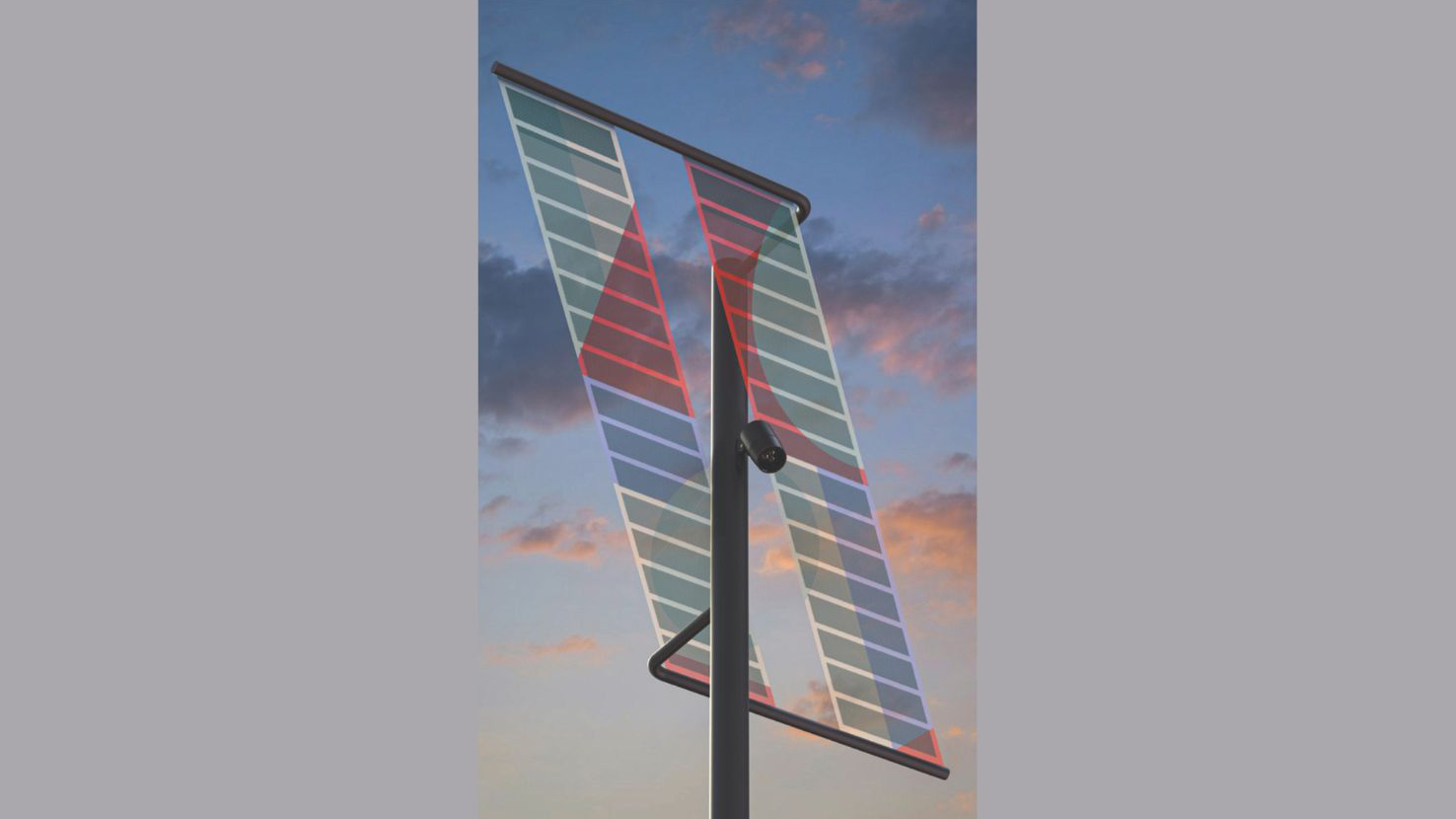
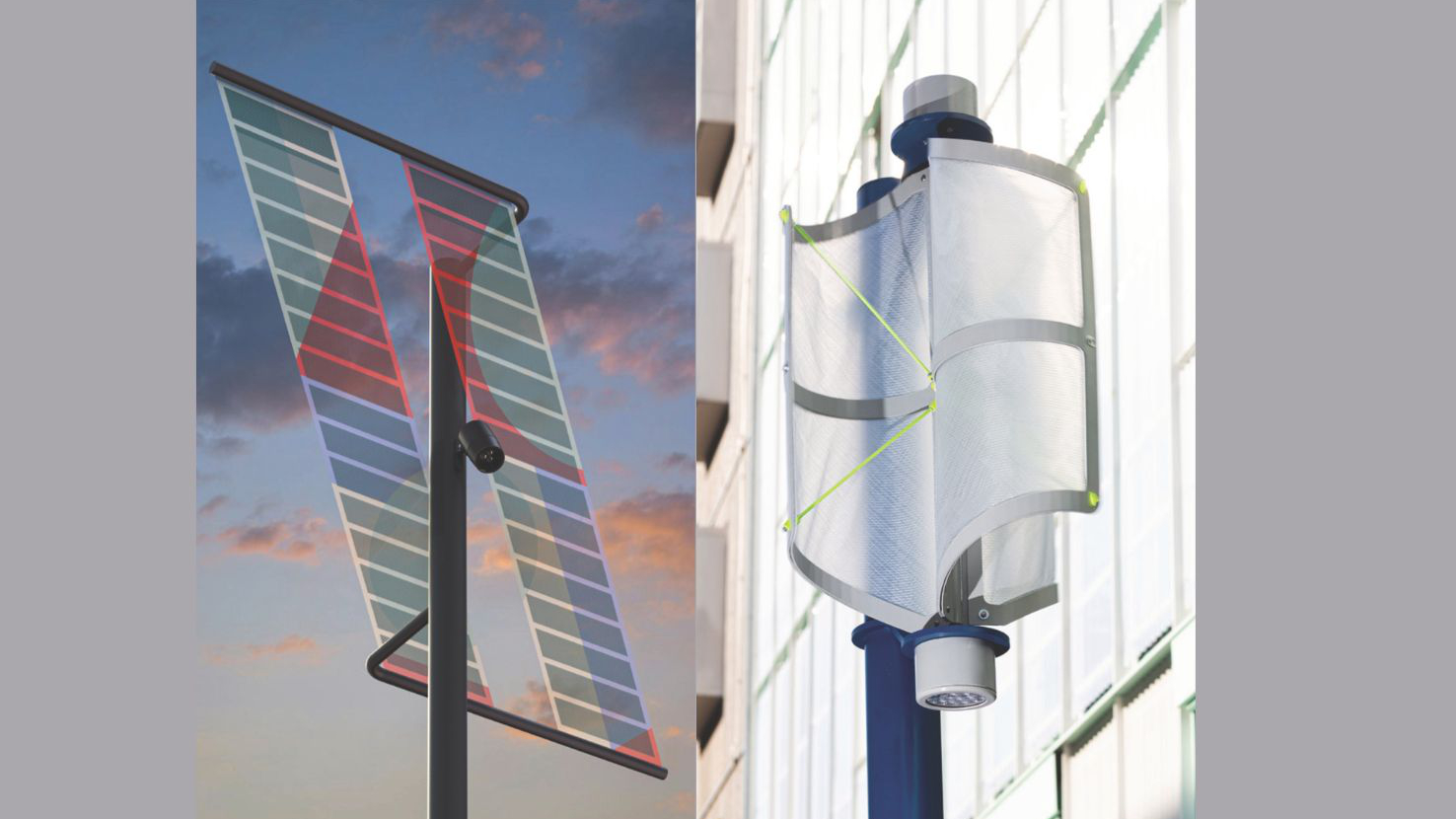
As part of the World Design Capital initiative, Main-Light is being realized for the first time as a pilot project along the Frankfurt Main riverside cycle path. The innovative lighting modules are powered by large-format, colored, translucent solar films developed in cooperation with the manufacturer ASCA. In combination with demand-based lighting control and innovative LED technology by ewo, this creates an energyautonomous lighting infrastructure that goes far beyond pure functionality. The modules define shaded places to linger along the river - bank, activate urban space, and contribute to the reduction of urban heat islands. At the same time, renewable energy gene - ration is made deliberately visible: the solar film is not a hidden technical component, but a central, vibrant design element. In this way, the energy transition is seamlessly integrated into the urban environment as a publicly visible and positive signal.
Papilo: Kinetic light infrastructure for the energy transition
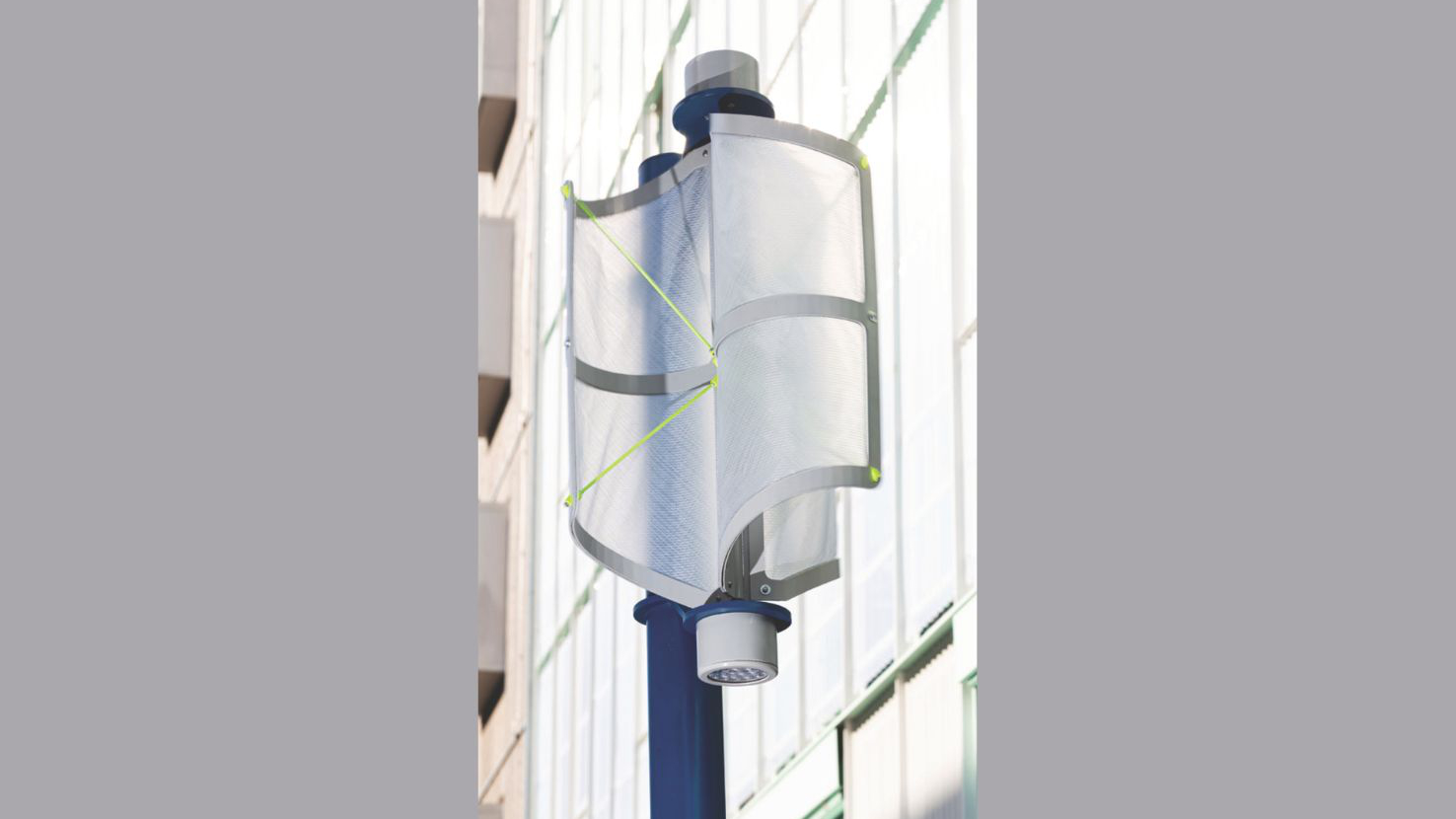
Papilio is an autonomous luminaire with an integrated wind turbine and positions itself as a visible infrastructural element of a sustai - nably transformed city. The luminaire is currently being developed as a pilot project for Esbjerg, a Danish city undergoing a profound transformation— from a formerly fossil-fuel-driven port city to one of Europe’s most important hubs for offshore wind energy. This structural shift is spatially translated into the urban landscape: the rotating, colored rotors turn energy production in this wind-rich region into a defi - ning design feature. Papilio gives wind a visual presence and enriches urban space both day and night through movement, color, and light. The luminaire thus becomes a symbol of a new, confident, postfossil chapter in Esbjerg and beyond.

Tobias Trübenbacher & Andreas Lang
The innovative lighting units are conceived as autonomous, resilient systems based on renewable, climate-neutral energy generation. As a result, they operate entirely independently of complex infrastructure and open up new possibilities for temporary, experimental, or hard-to-access urban spaces. At the same time, renewable energy generation is aesthetically emphasized, becoming visible and tangible in public space. Design becomes the link between technology, ecology, safety, and social aspects. With a fresh and bold aesthetic, we develop positive visions for the city of tomorrow—an invitation to transformation and a plea for responsible and sensorially engaging lighting in public space.