
A modular luminaire family that uses twisted veneer as a form-defining principle. Eigenwillicht explores the creative potential of twisted veneers – a material typically rejected in industrial wood production due to its unpredictable deformation behaviour.
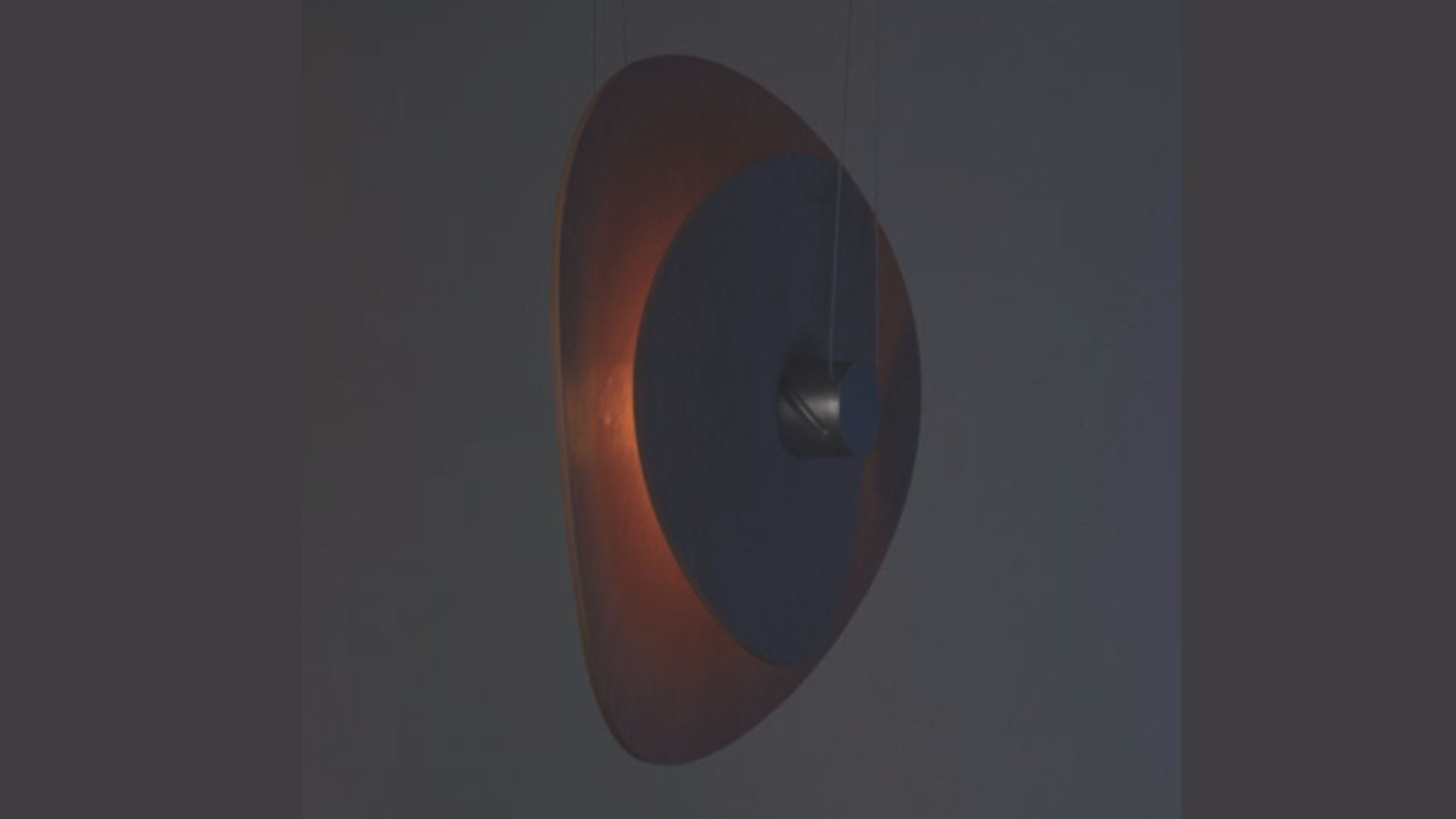
Rather than avoiding this so-called material flaw, the project deliberately harnesses the natural tensions of twisted growth as a shaping force, dispensing with moulds or energy-intensive forming processes. The resulting luminaire deforms individually not despite, but because of its irregularity. By understanding nature as the form-giver, Eigenwillicht challenges industrial sorting logic and demonstrates new ways of reintegrating discarded materials into circular design systems.
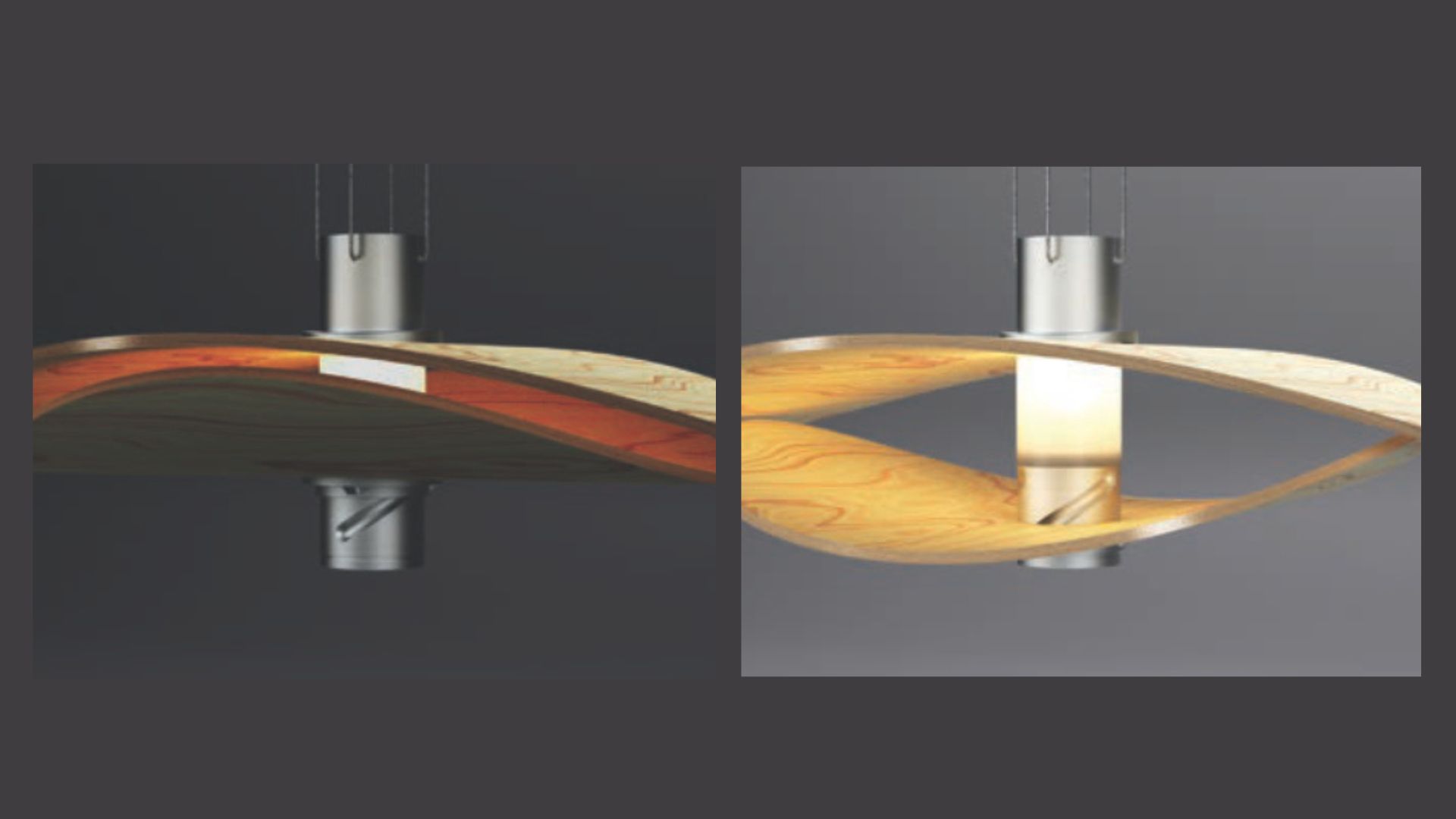
Dimming Function
The luminaire features an integrated, simple mechanical dimming mechanism. Two wooden panels function as opposing lampshades between which the light is cast. Brightness can be continuously adjusted by altering the distance and angle between the two elements.
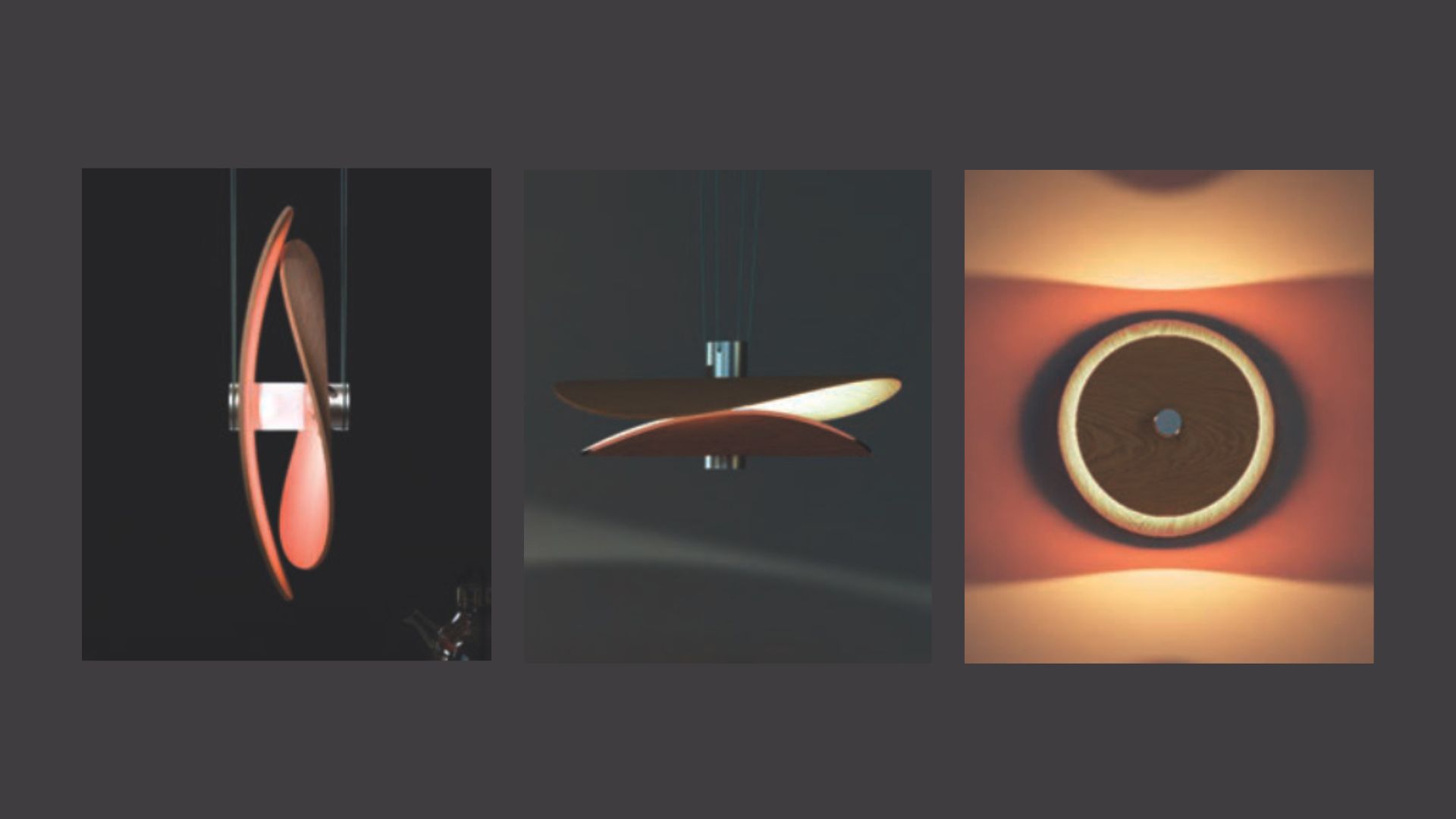
Modular Luminaire Family
Eigenwillicht is conceived as a modular lighting system. By exchanging the end pieces, different luminaire typologies can be realised, including horizontal and vertical pendant luminaires as well as a wall light. The system is designed to be expandable, allowing for future adaptations and configurations.
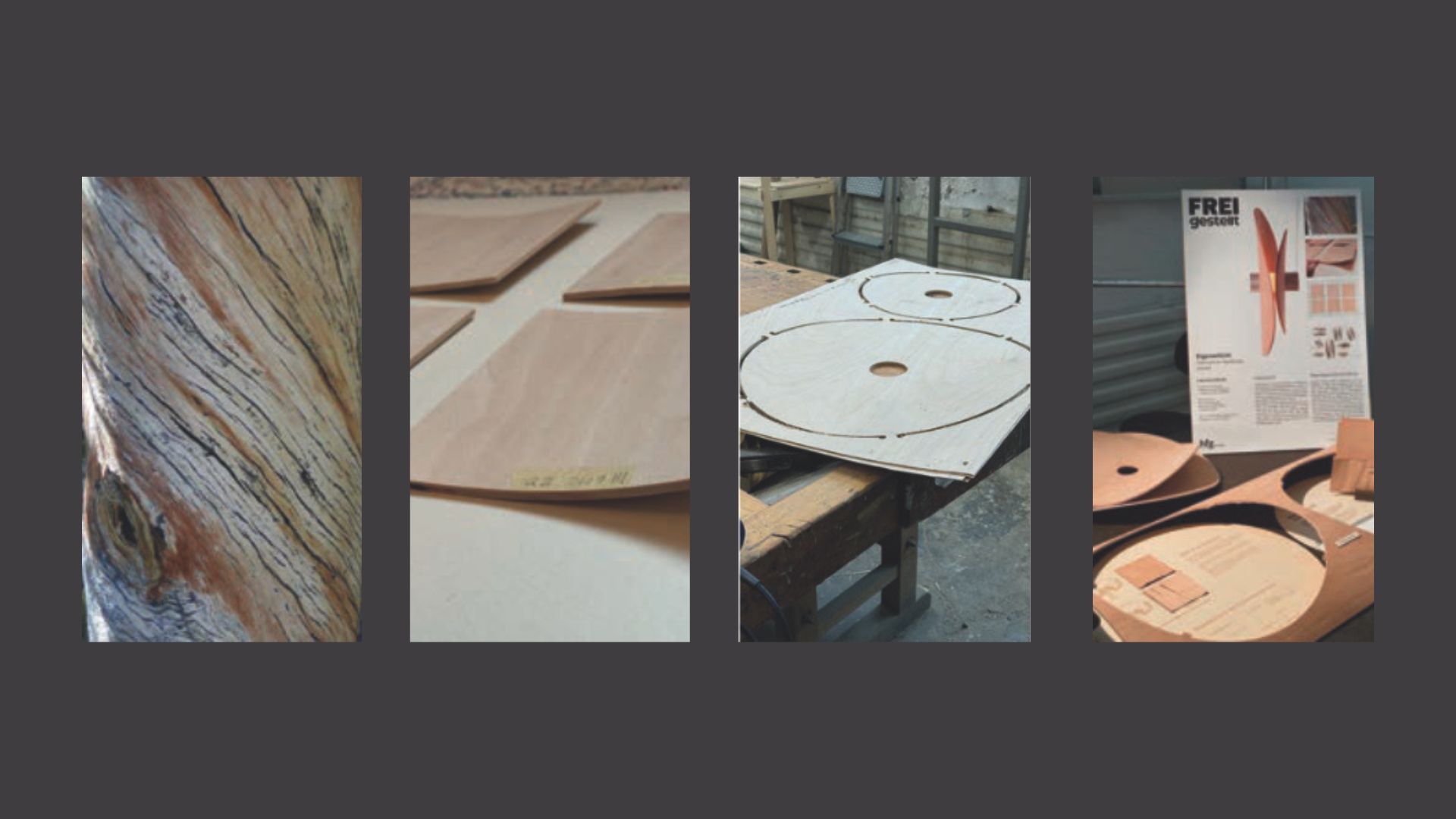
Manufacturing Process & Material Behavior
Spiral-grain veneers are pressed into laminated panels, which are then CNC-milled to form the lamp shades after drying. Within minutes of being released from the press, the panels begin to curve noticeably. The material continues to react sensitively to temperature and humidity, making each lamp a dynamic expression of its material properties.
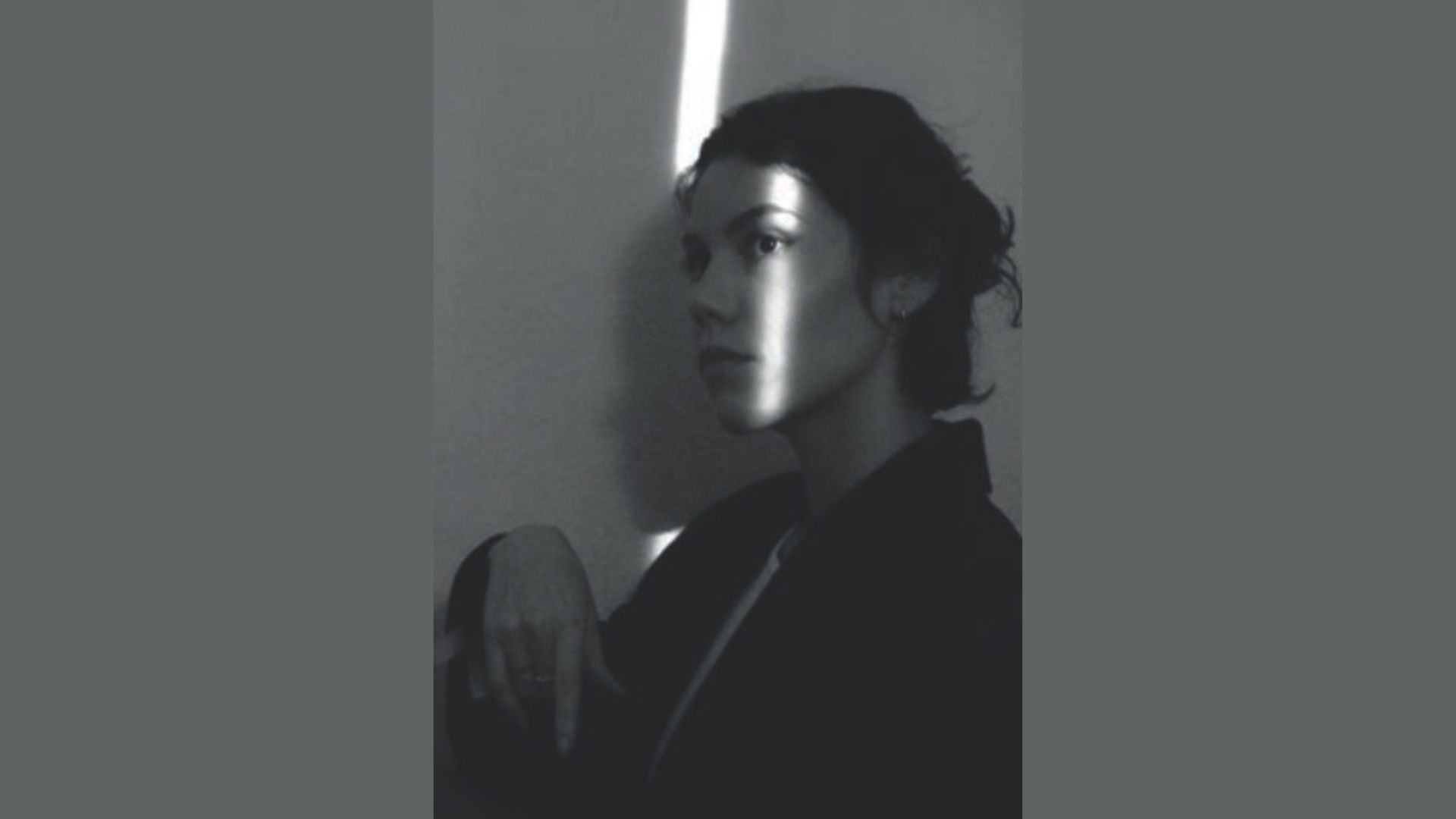
Lisa Schollbach (1999, Hanover, Germany) is a product and material designer based in Frankfurt am Main. Her design practice is rooted in a dialogical approach to materials, where form is not predetermined but developed through attentive observation and response to material behaviour. The resulting objects are characterised by a clear, reduced formal language while retaining a tangible sense of tension and individuality. She is currently pursuing a Master’s degree in Product and Material Design at HfG Offenbach. Previously, she studied at Bauhaus-Universität Weimar and completed her Bachelor’s degree in Product Design at HAWK University of Applied Sciences and Arts in Hildesheim.