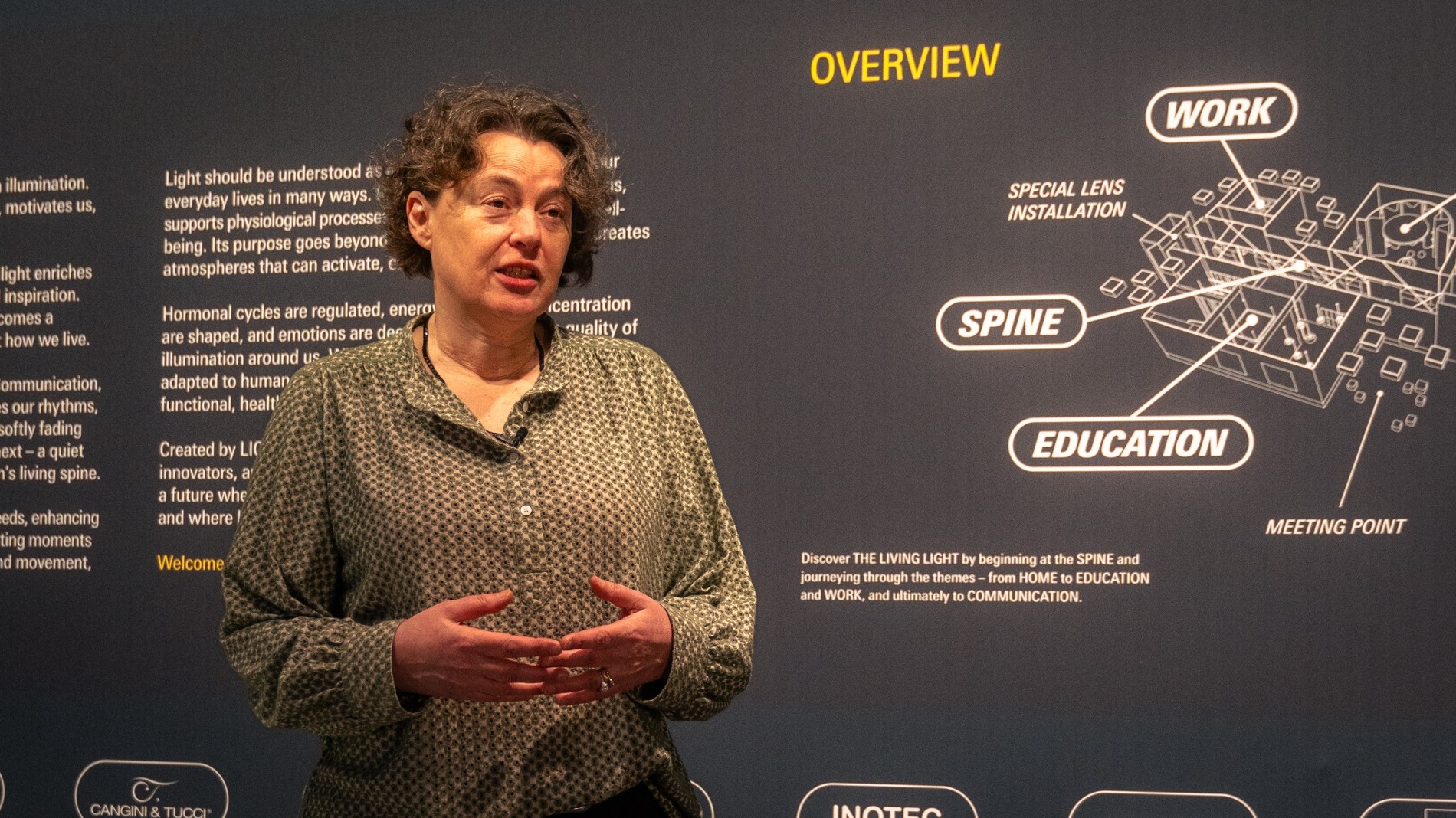
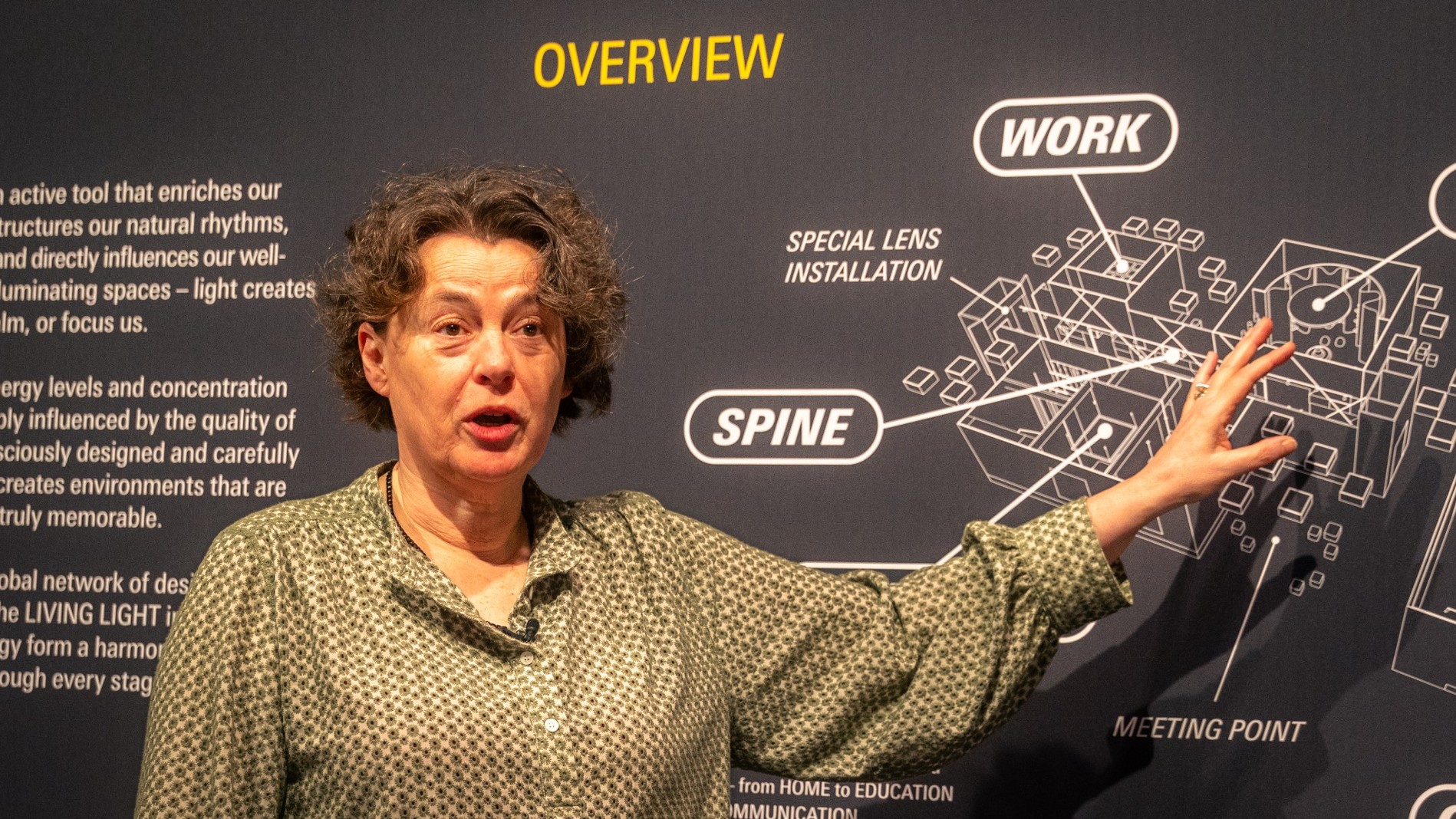
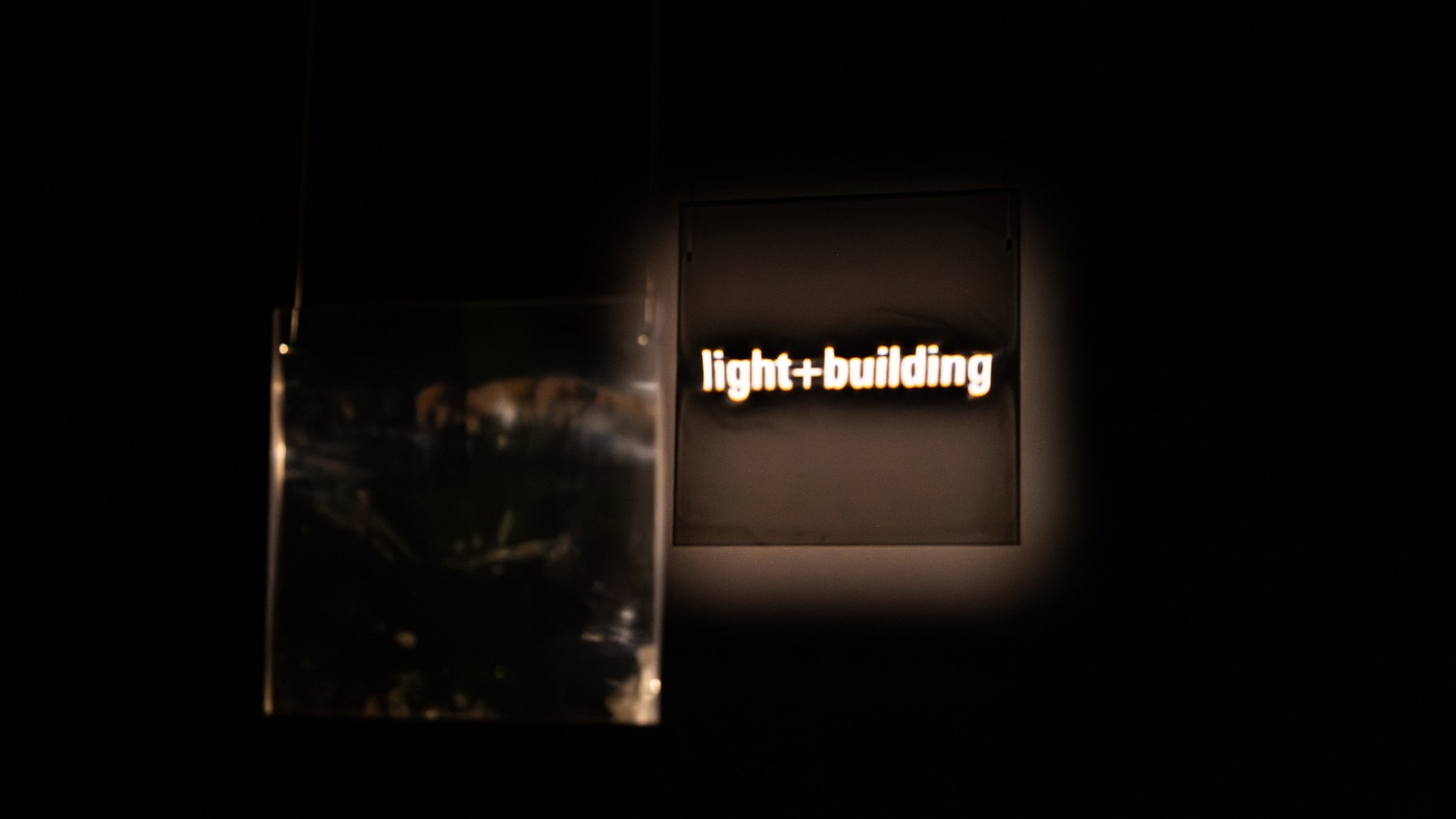
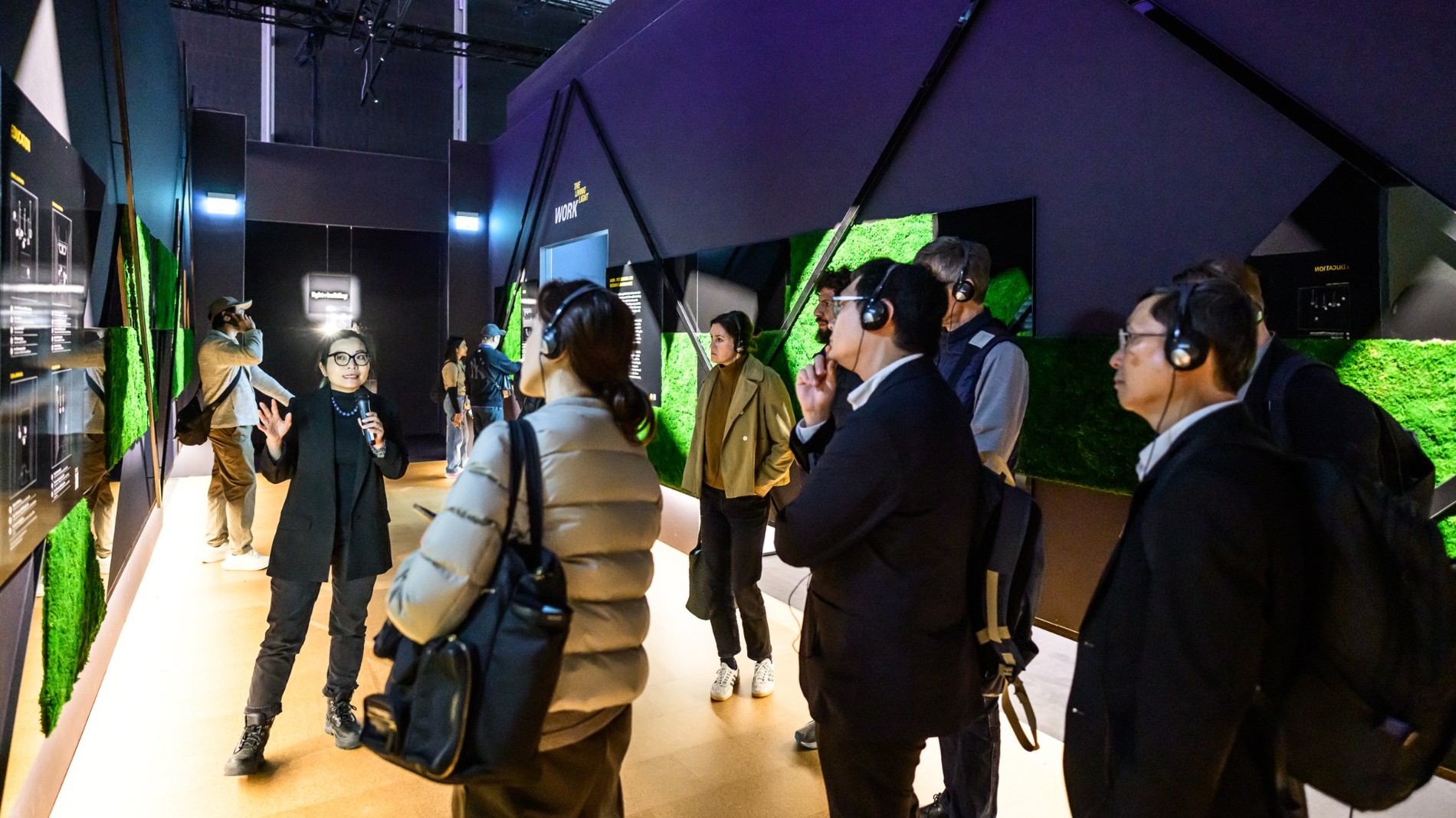
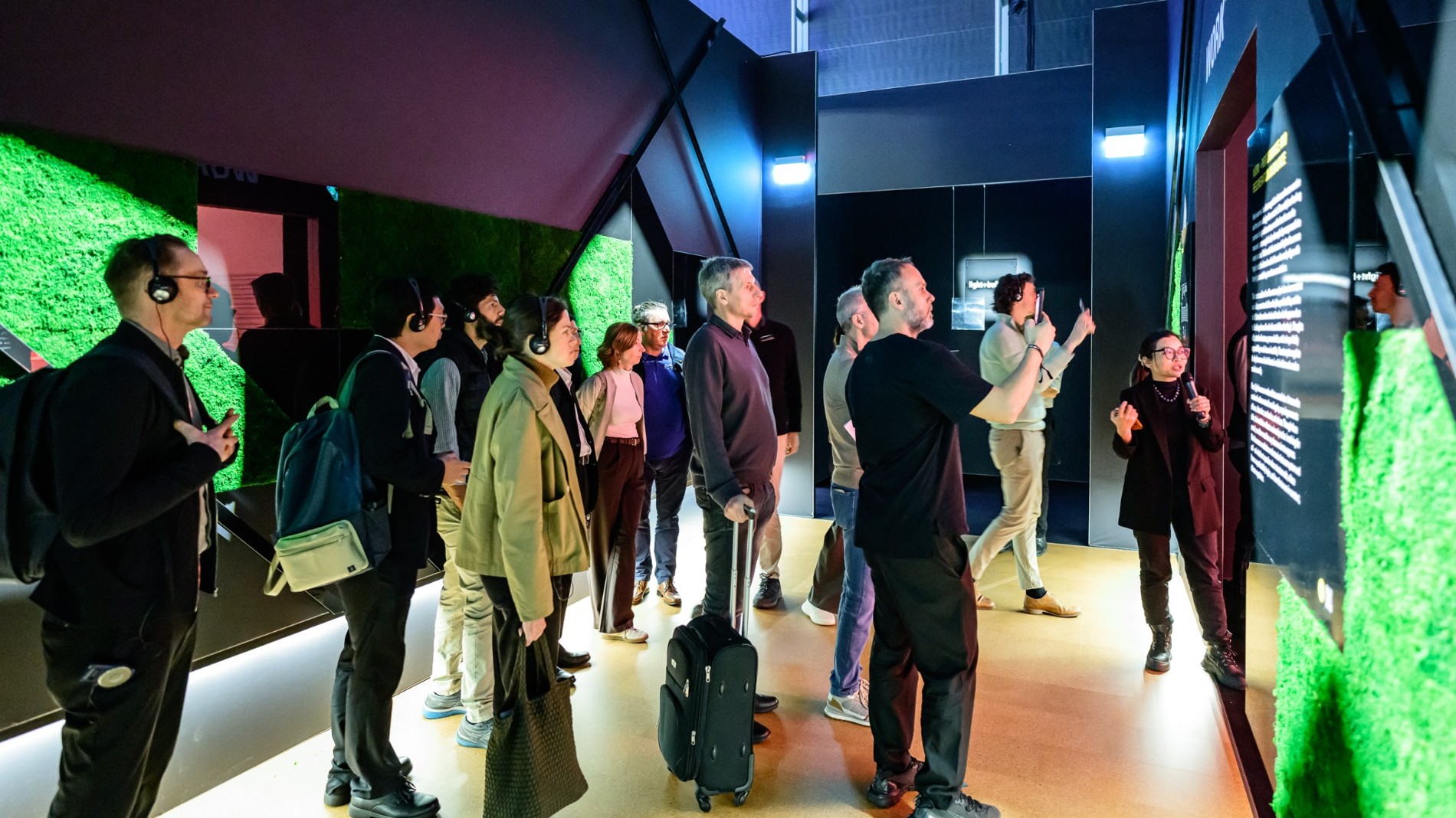
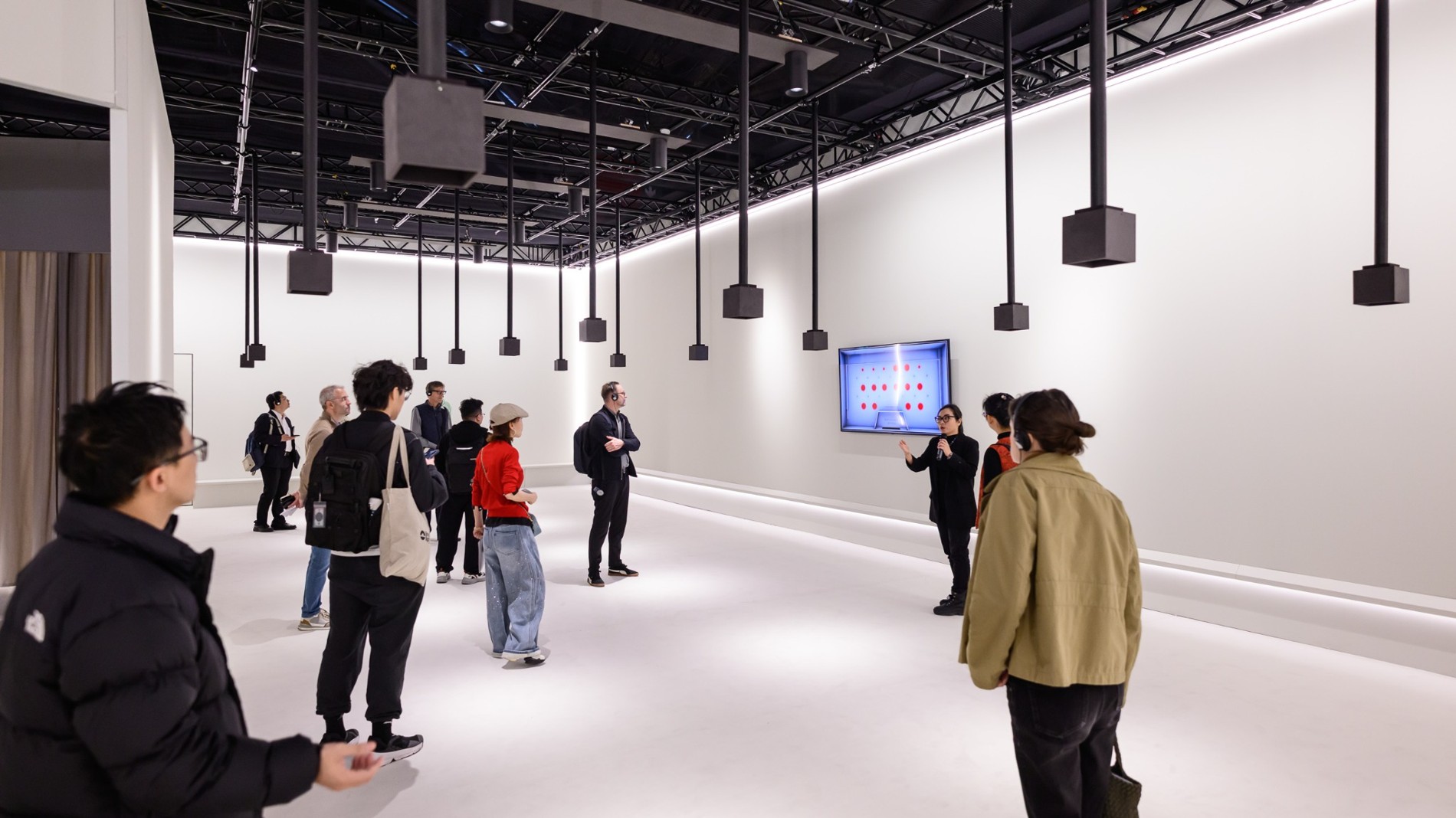
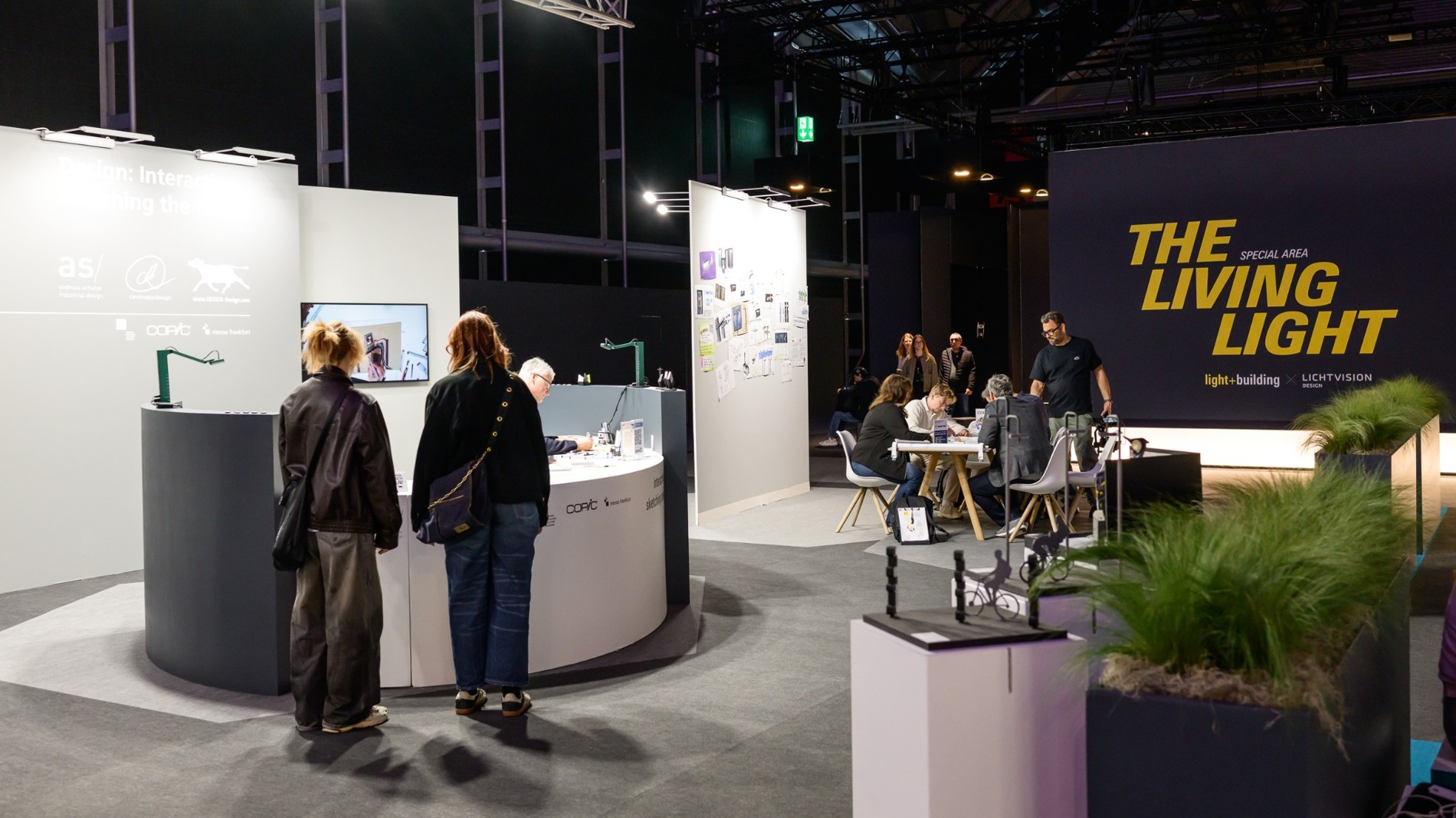
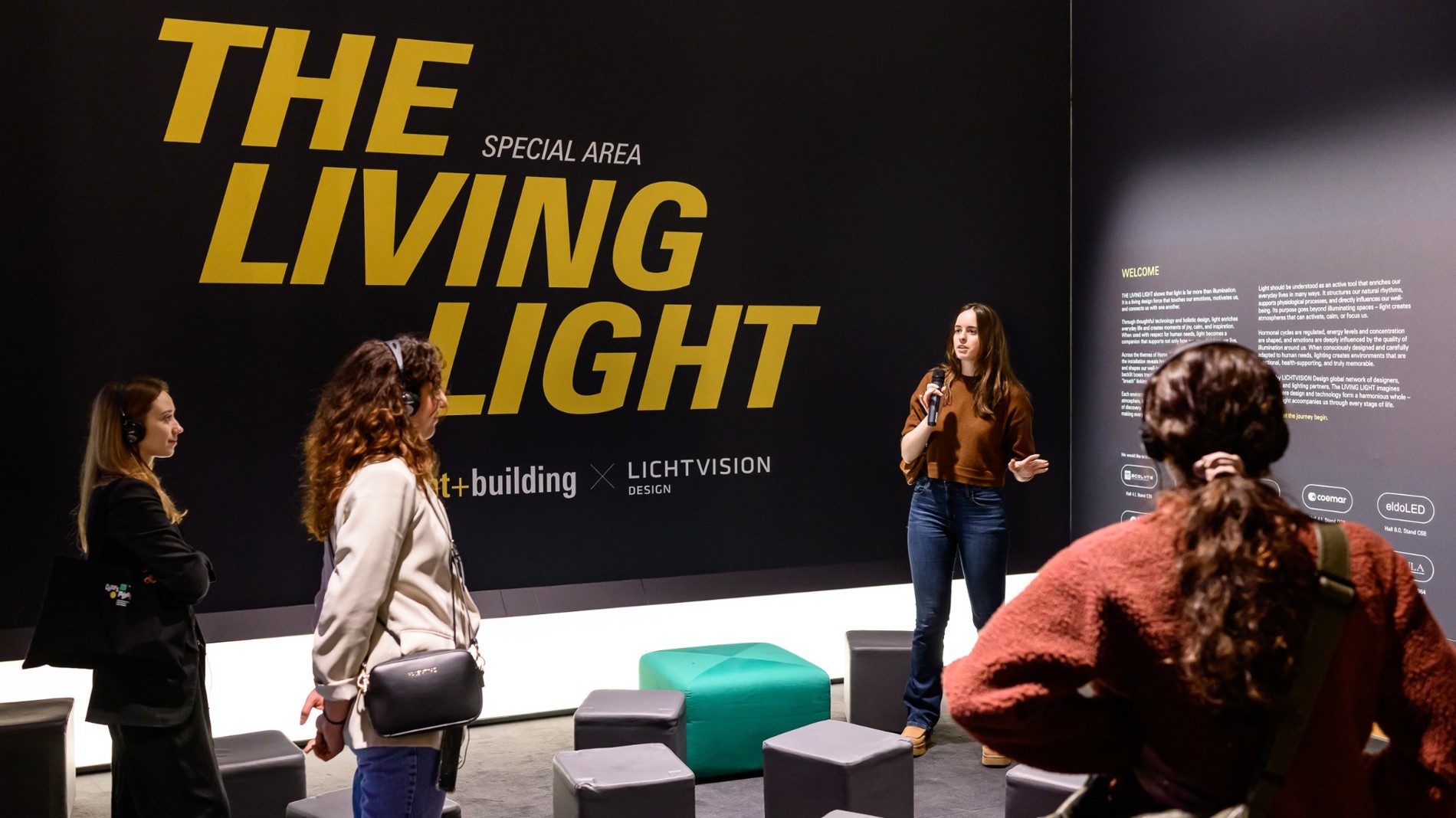
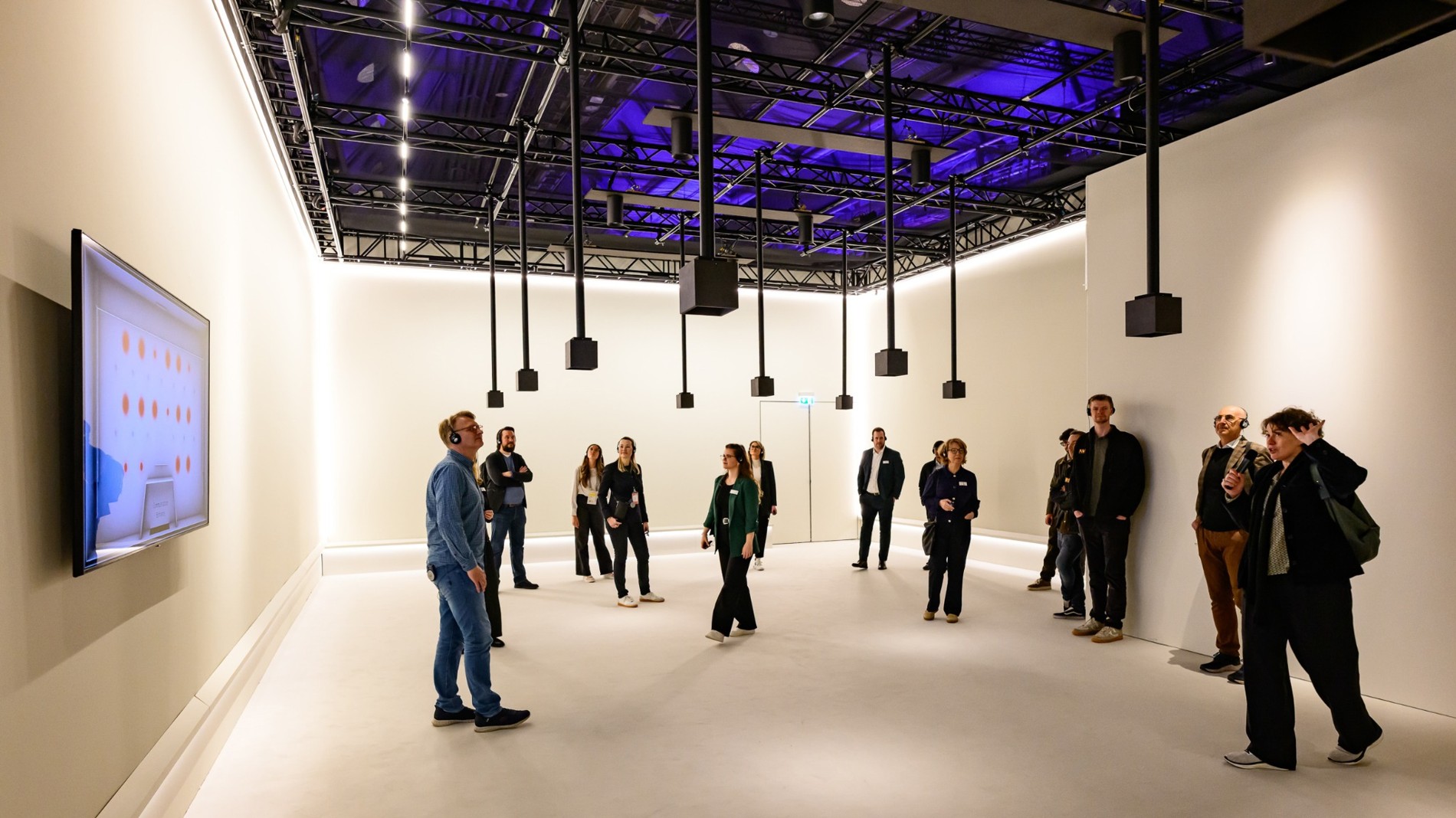
With the special area “The Living Light,” light became more than just a technical solution: it became tangible, experiential, and meaningful. In Hall 3.1, an atmospheric walkthrough guided visitors through four different areas, demonstrating how light influences our daily lives. The installation was developed by Lichtvision Design on behalf of Light + Building.
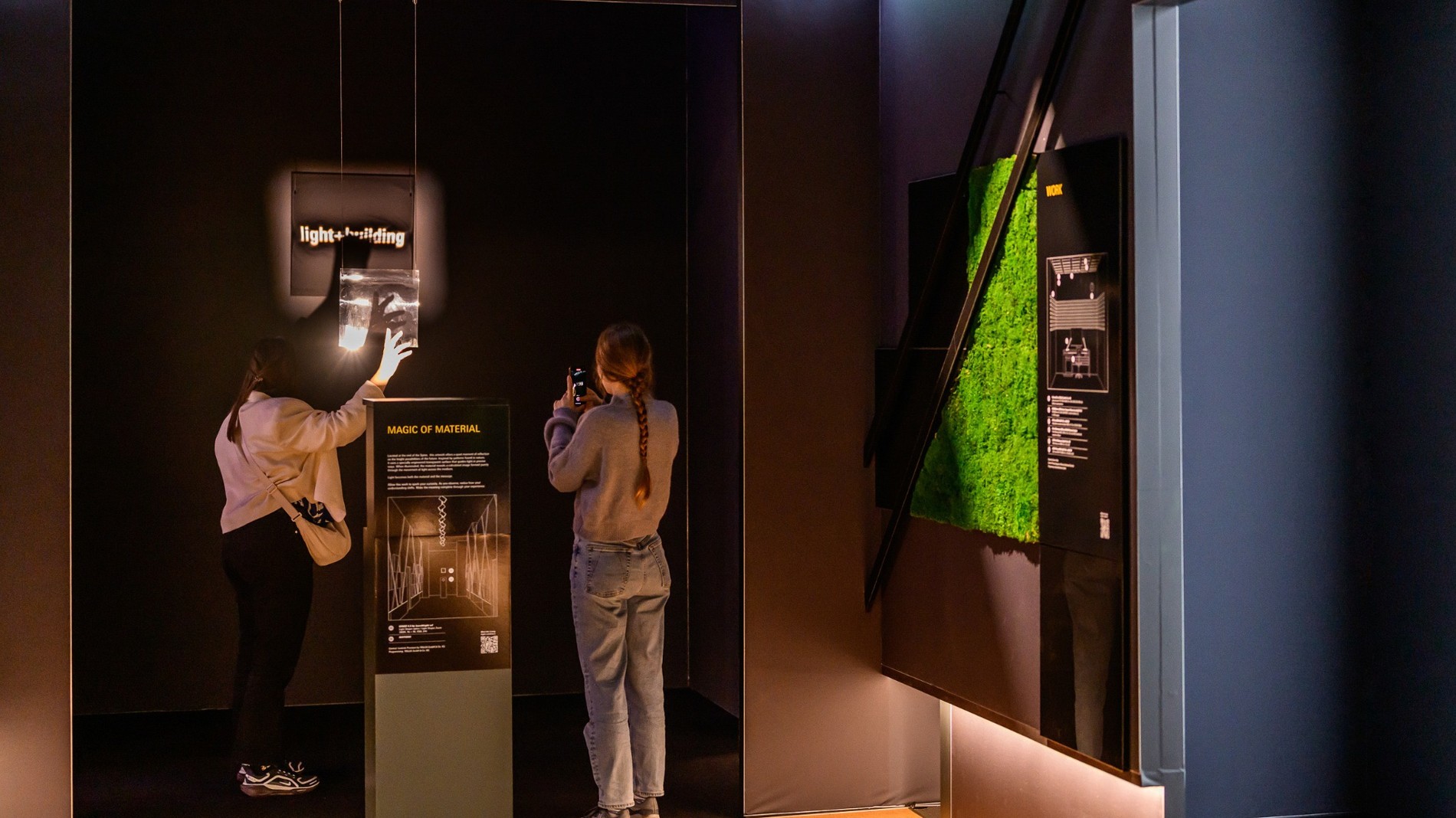
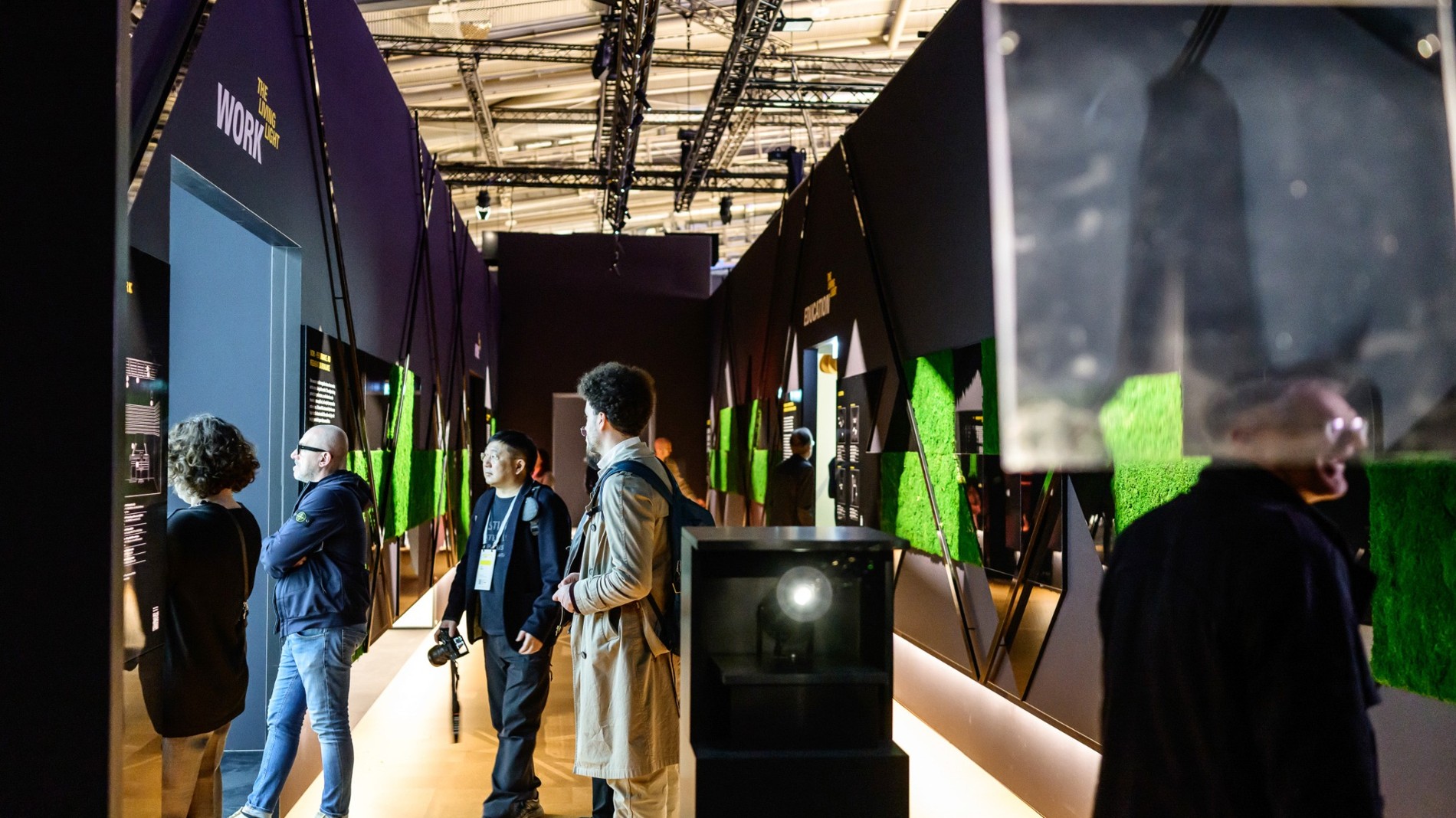
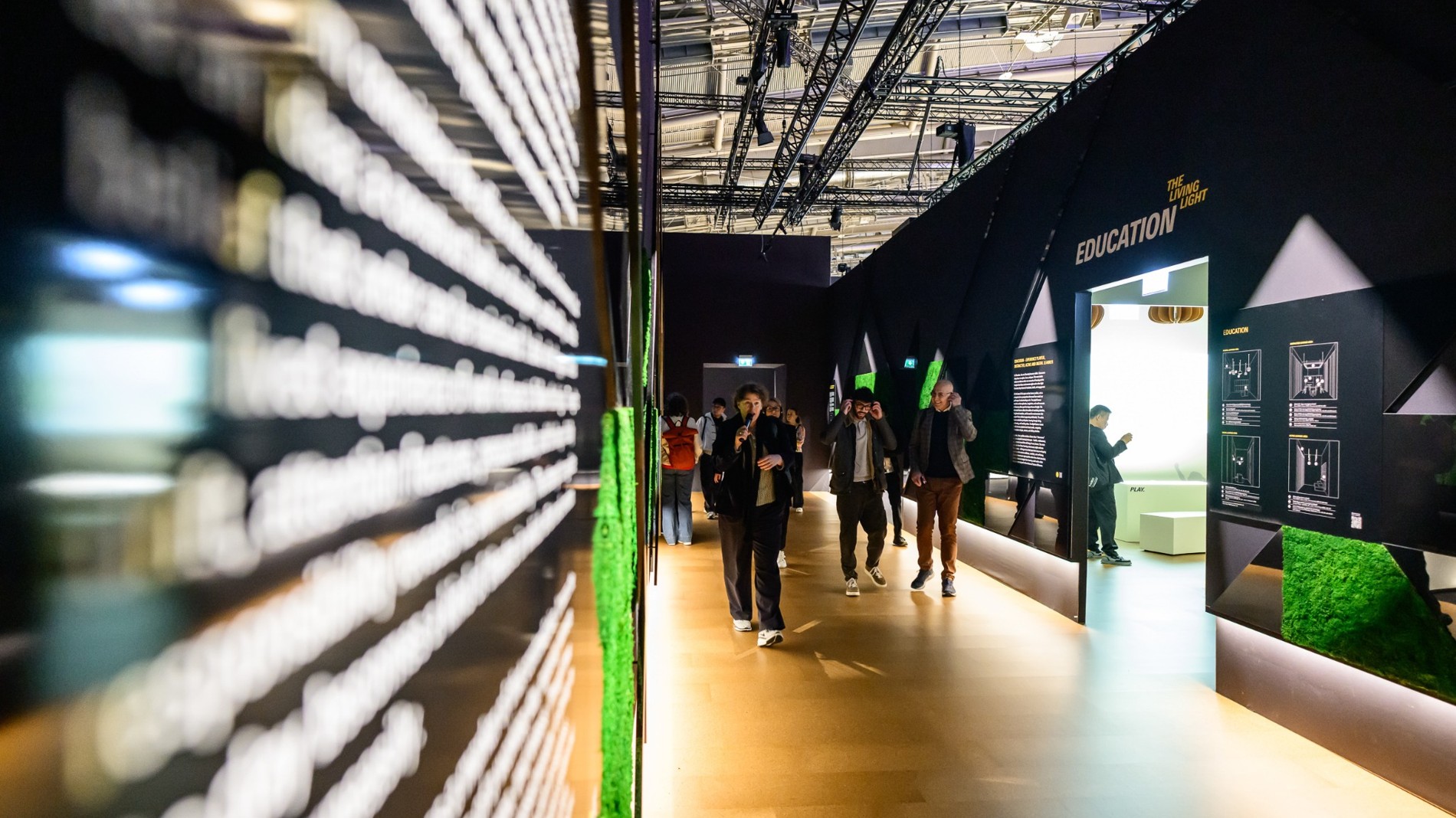
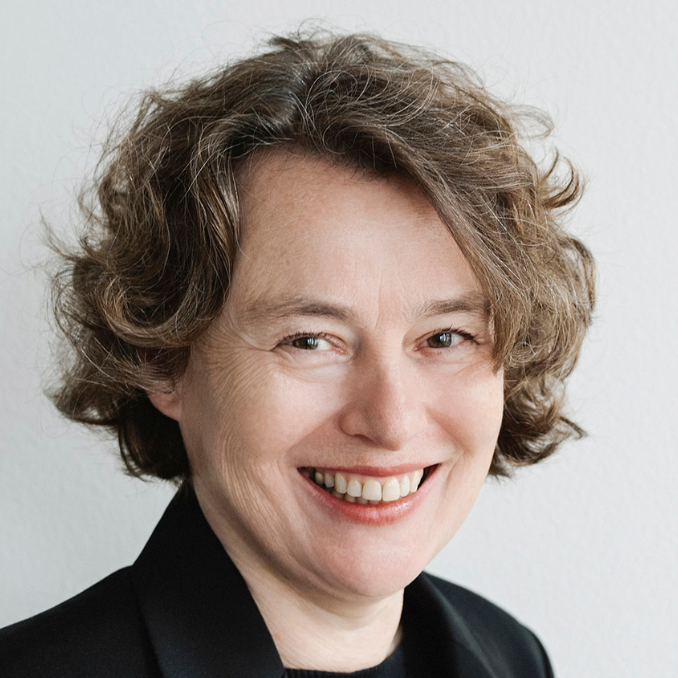
The curatorial direction was led by Carla Wilkins, Senior Partner and Global Creative Director at Lichtvision Design Berlin. The international lighting design studio operates in four locations: Berlin, London, Shanghai, and Hong Kong. Each location was responsible for one of the four thematic areas of the special show: Home, Education, Work, and Communication. This resulted in a multifaceted overall concept shaped by diverse cultural perspectives, working methods, and design approaches. The four key themes guided visitors through different aspects of life and were connected by the Green Spine—a moss wall staged with light.
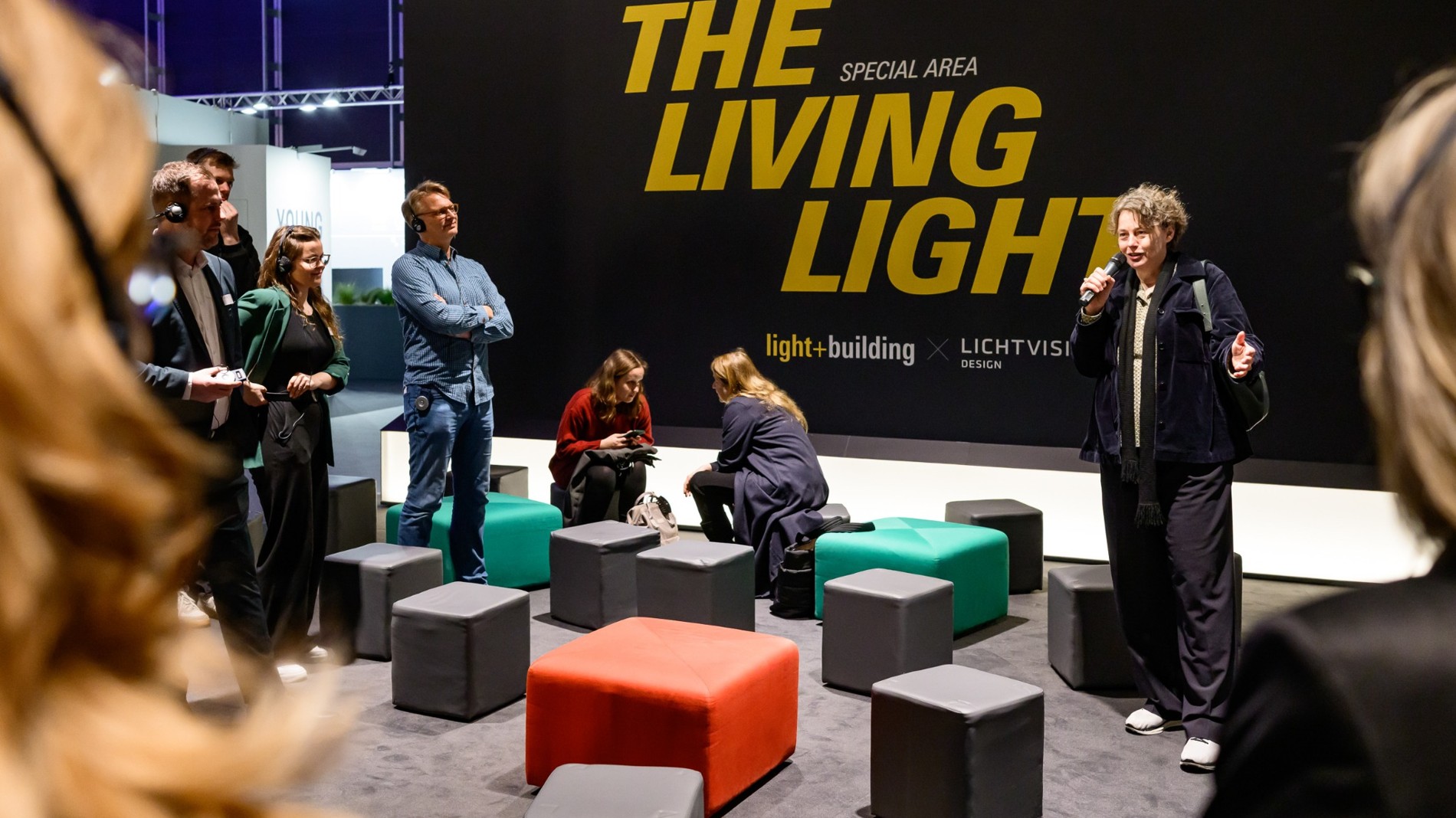
The special area was complemented by exhibitors whose products were integrated into the installation, vividly illustrating the lighting solutions in practical applications. In addition, daily guided tours by Lichtvision Design were offered, providing visitors with orientation and in-depth insights into the individual light installations as well as the underlying concepts and design approaches.
“With The Living Light, we wanted to demonstrate that light is far more than illumination. Light is a living design element that appeals to our emotions, motivates us, and connects us with one another. When technology is applied correctly and embedded in a holistic concept, light can enhance every moment of our daily lives.”
Home – the emotional starting point of everyday life
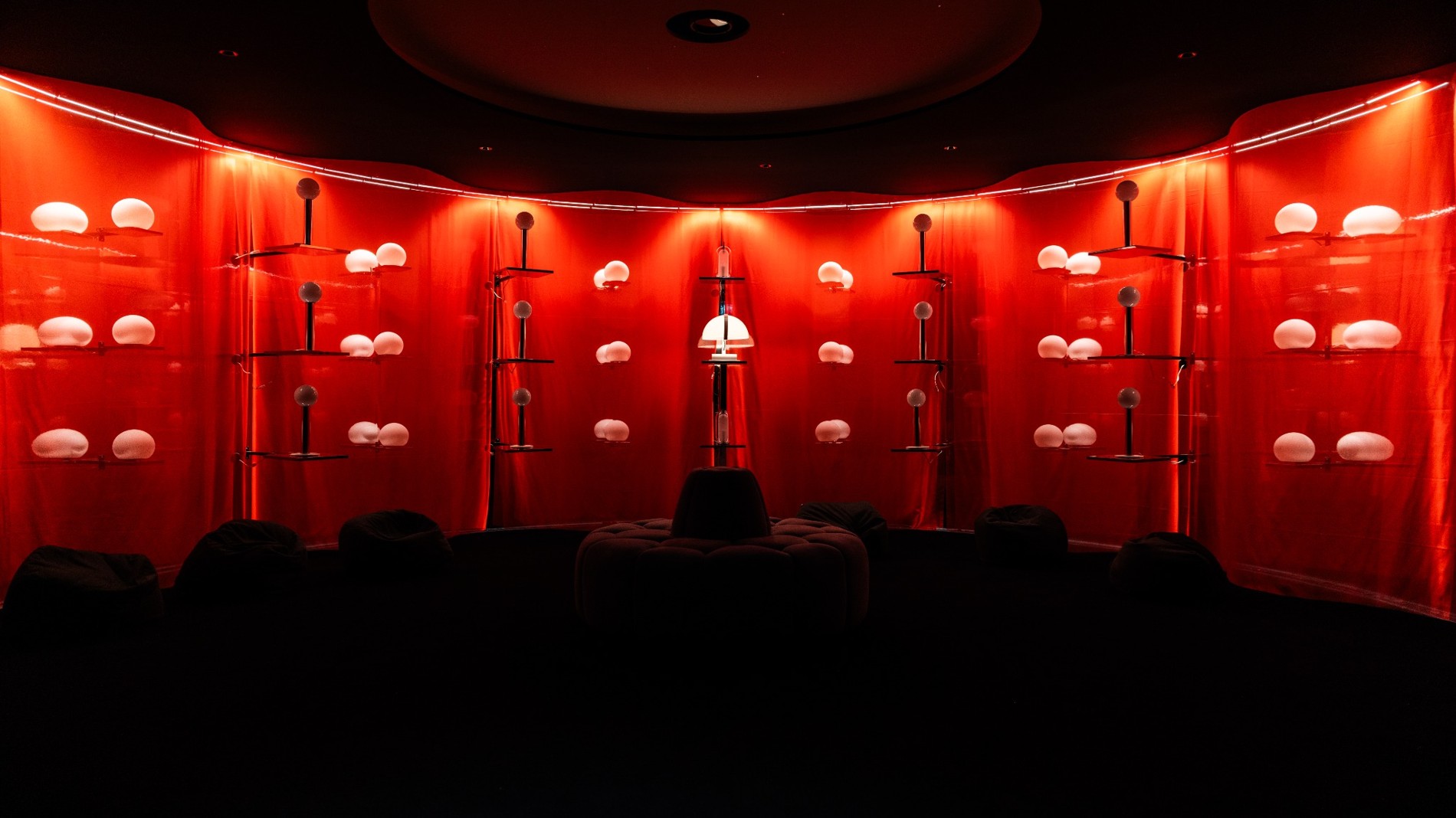
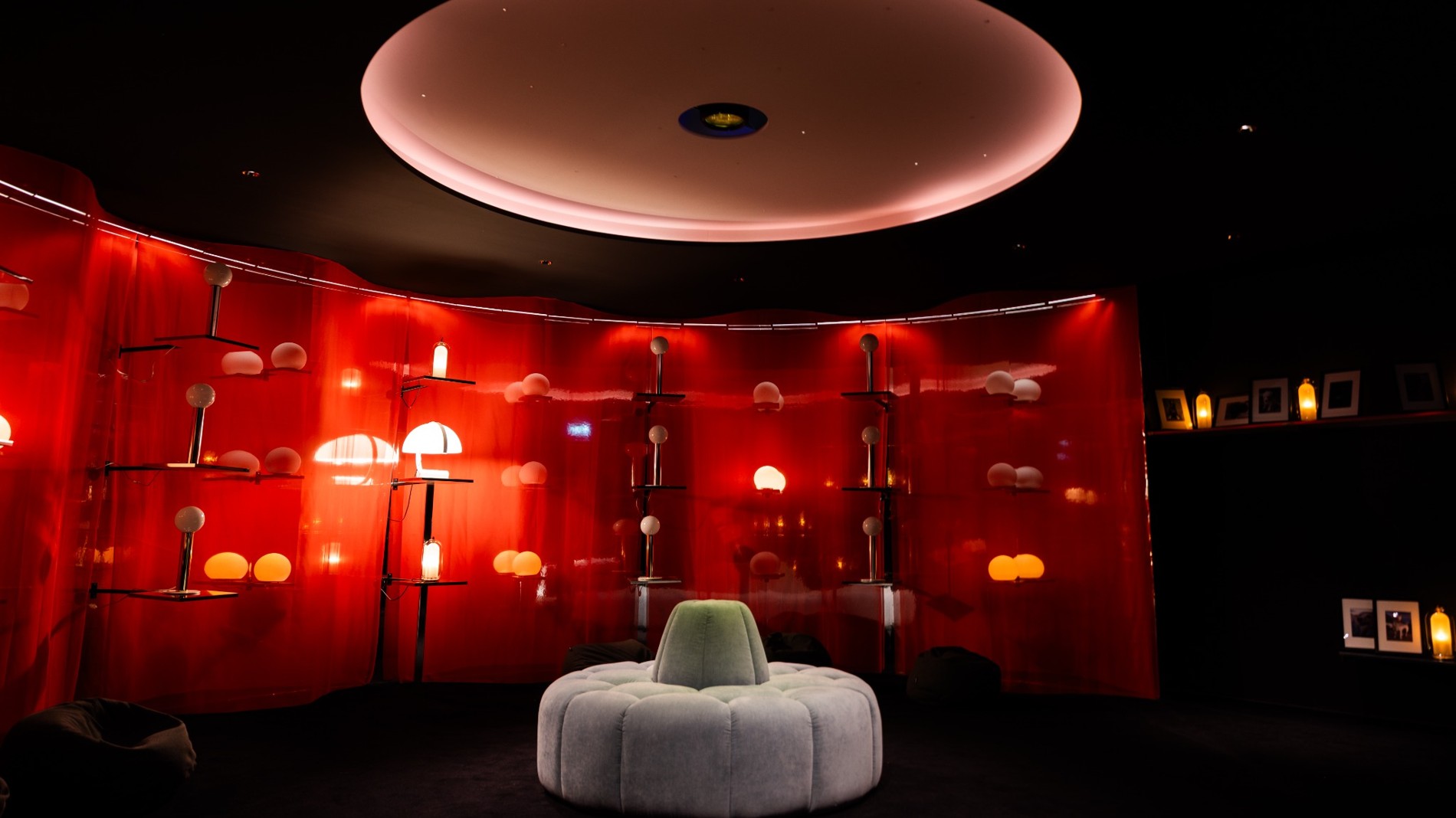
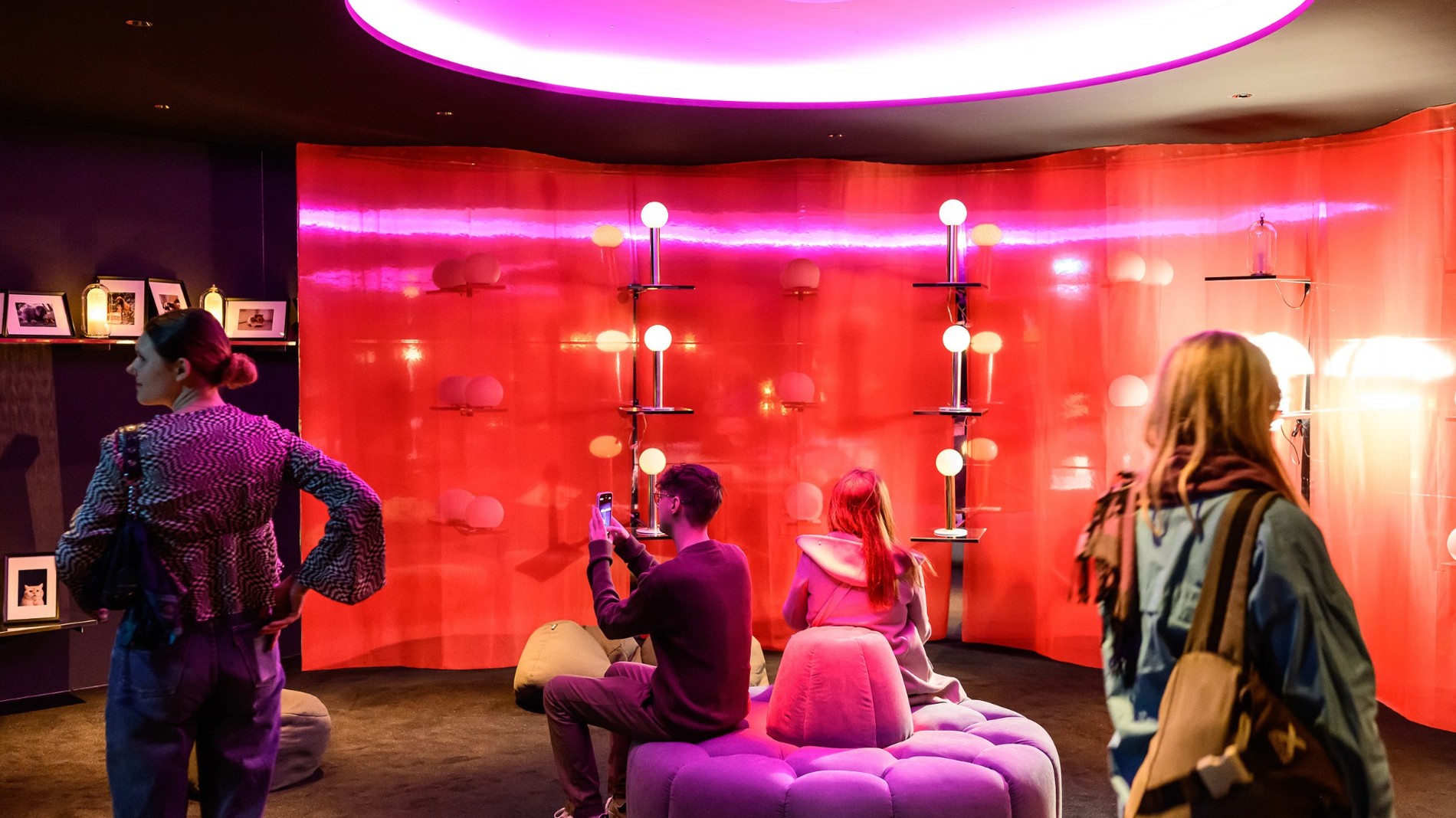
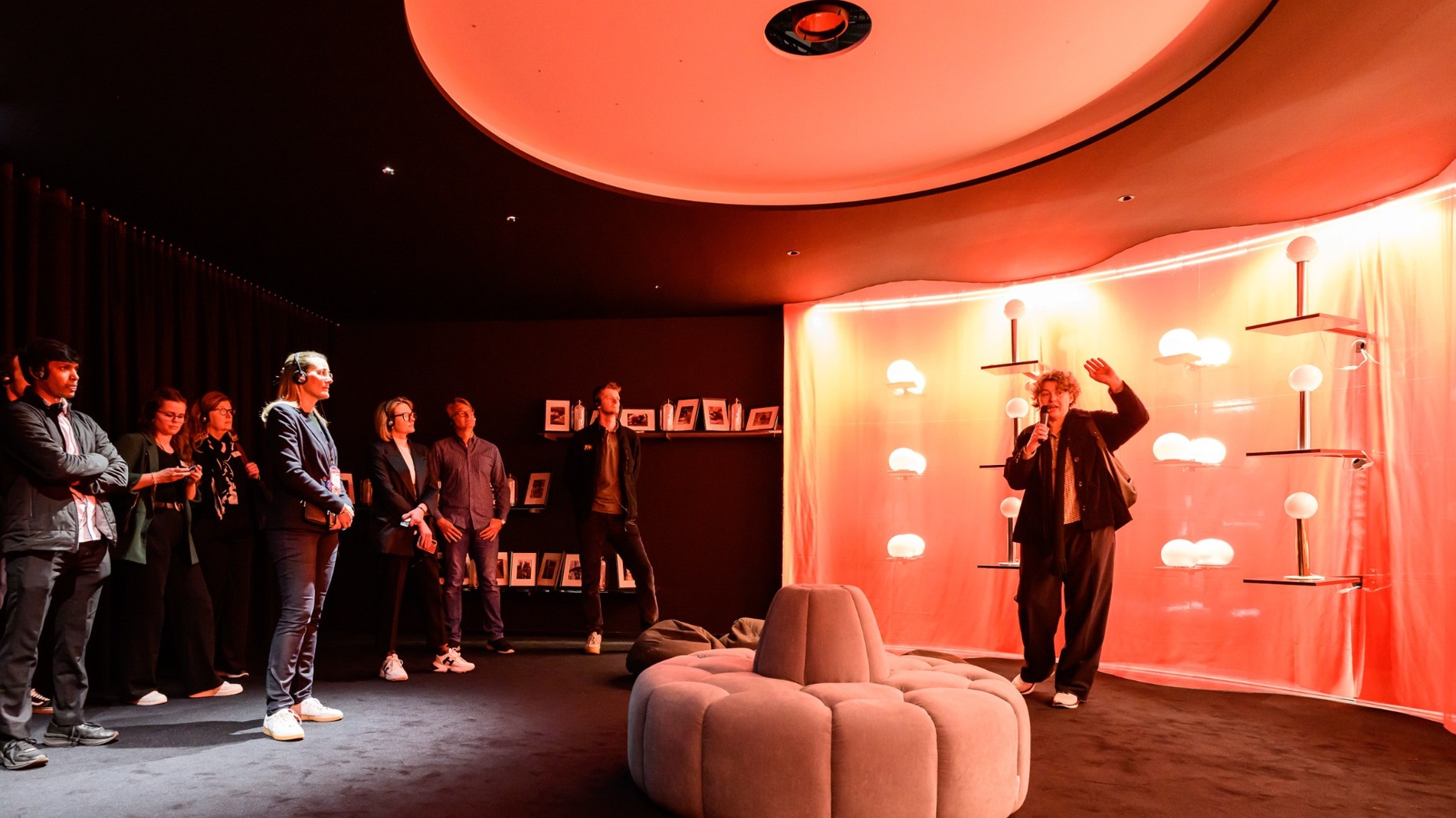
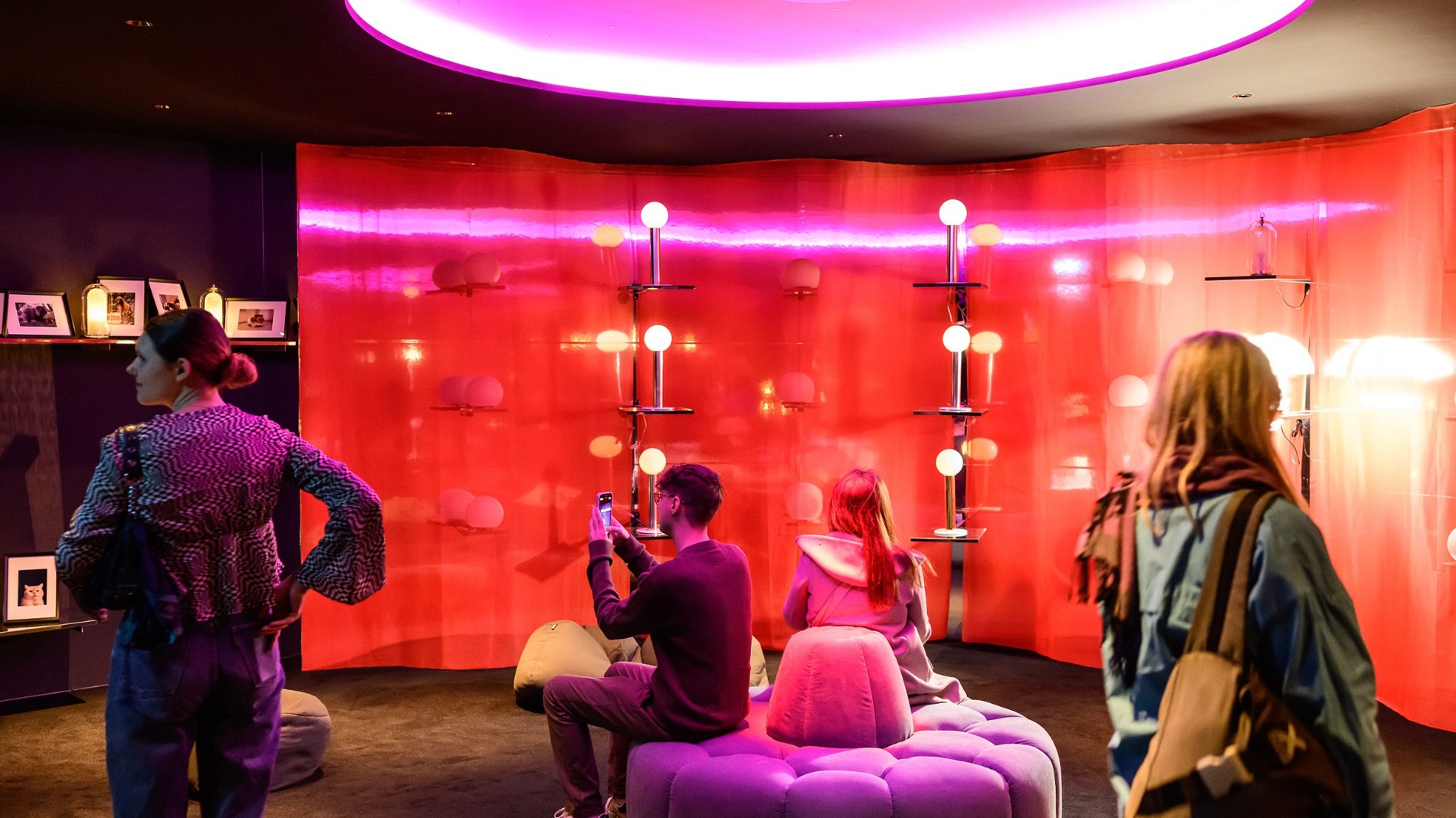
In the Home area, light was experienced as a personal companion. It adapted to times of day, moods, and individual needs. Various lighting scenes simulated the course of a day—from calm, warm morning light to energizing moments at midday, through to dimmed lighting and complete darkness. Visitors could influence the lighting atmosphere themselves and experience how light creates a sense of comfort, calm, and well-being.
Education – motivation and health in focus
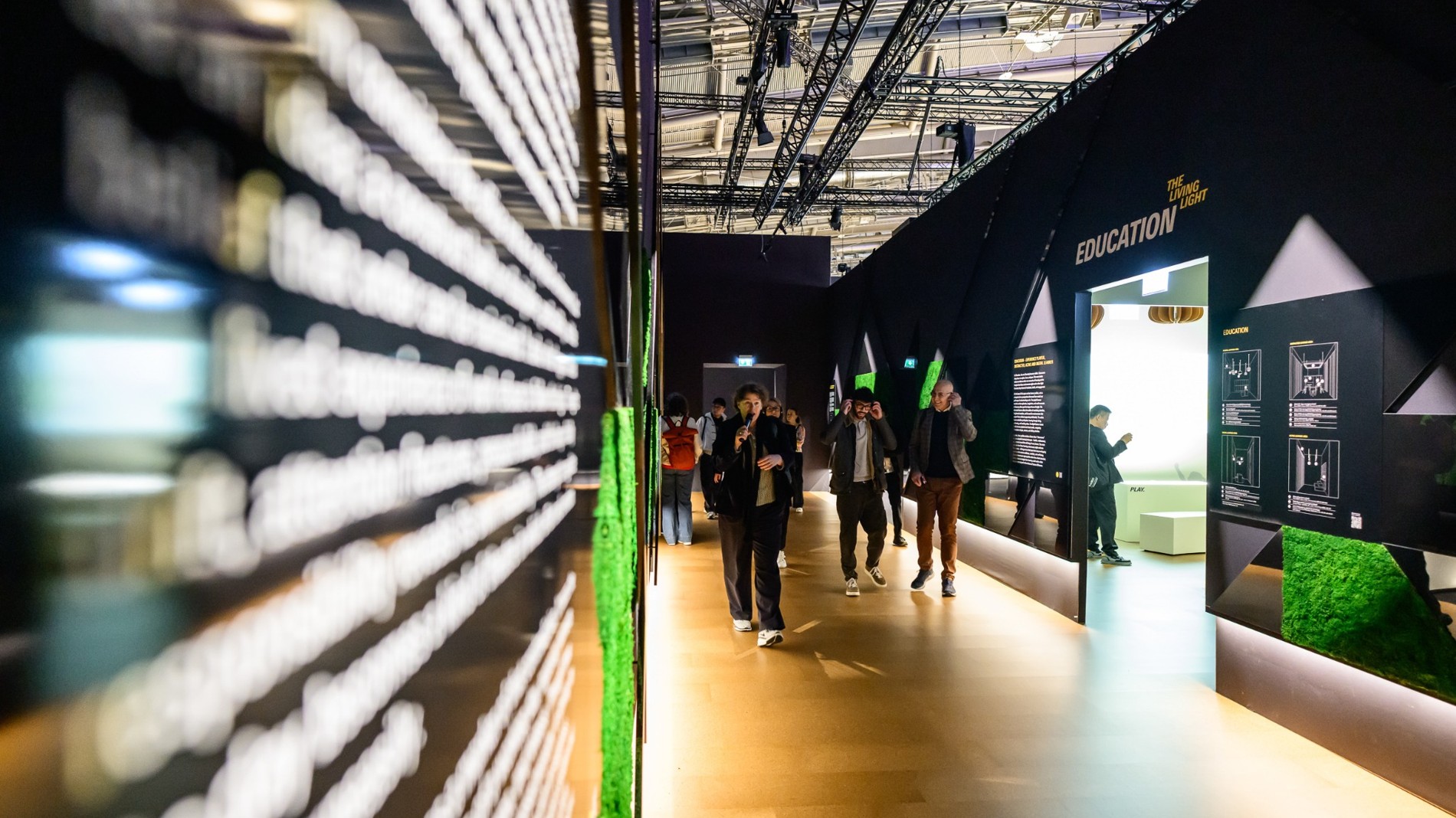
Learning is an individual process, and light plays a crucial role in it. The Education area demonstrated, through four central spatial scenarios, how light supports different types of learners—from playful and active environments to digital learning spaces and disruptive formats with specific health requirements. With the right lighting settings, motivation can be increased and sensory overload reduced.
Work – the rhythm of the working day
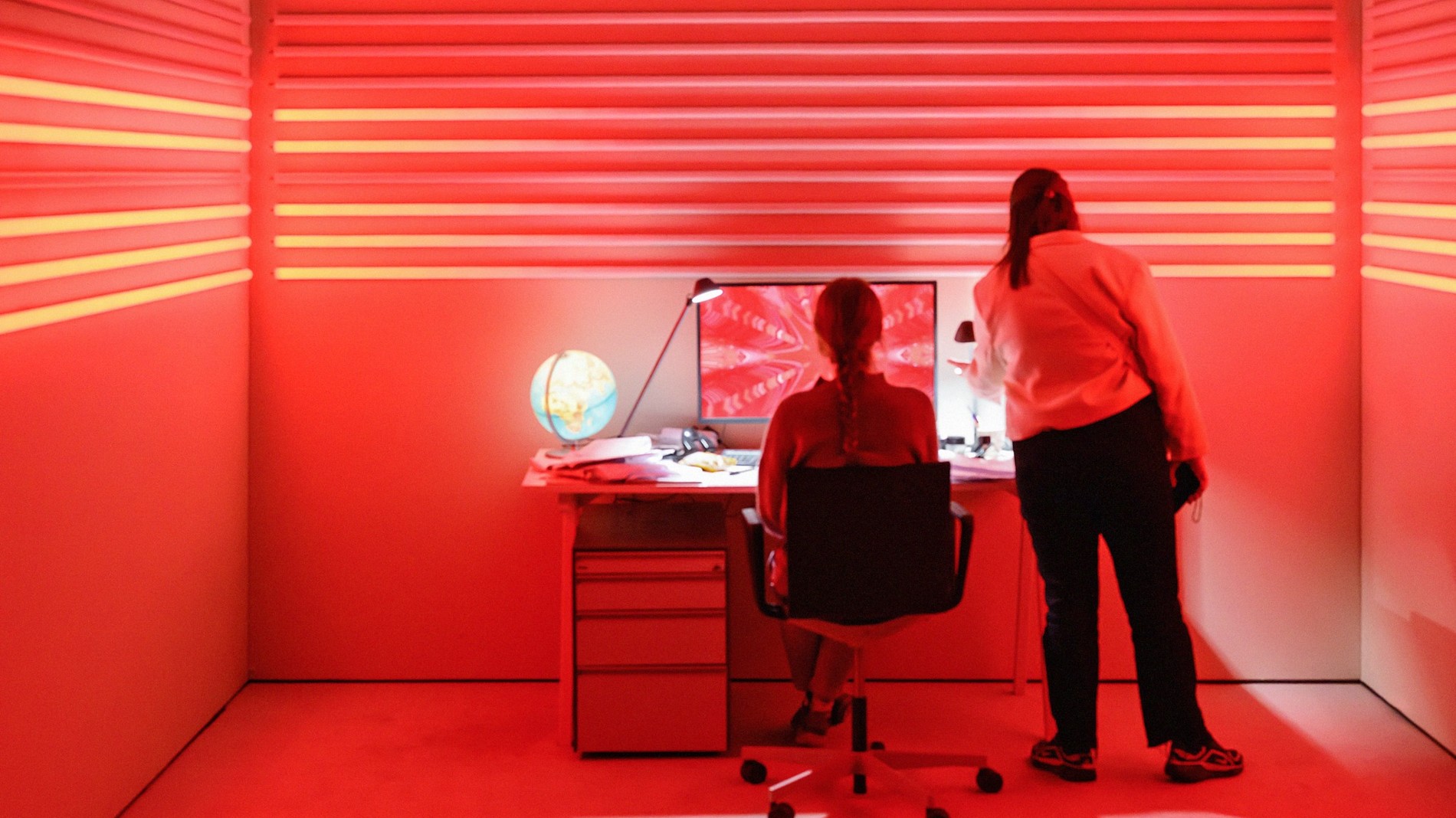
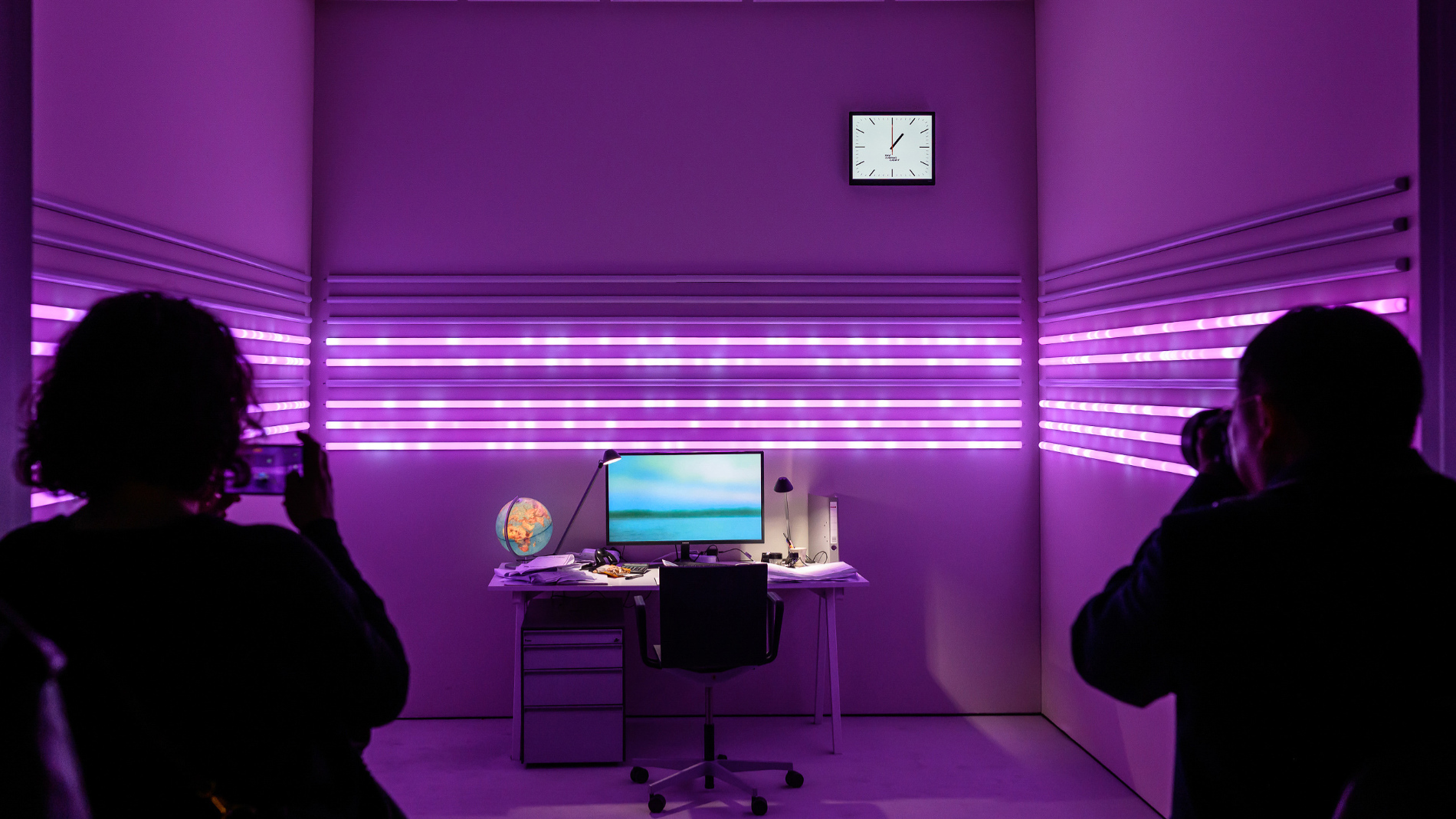
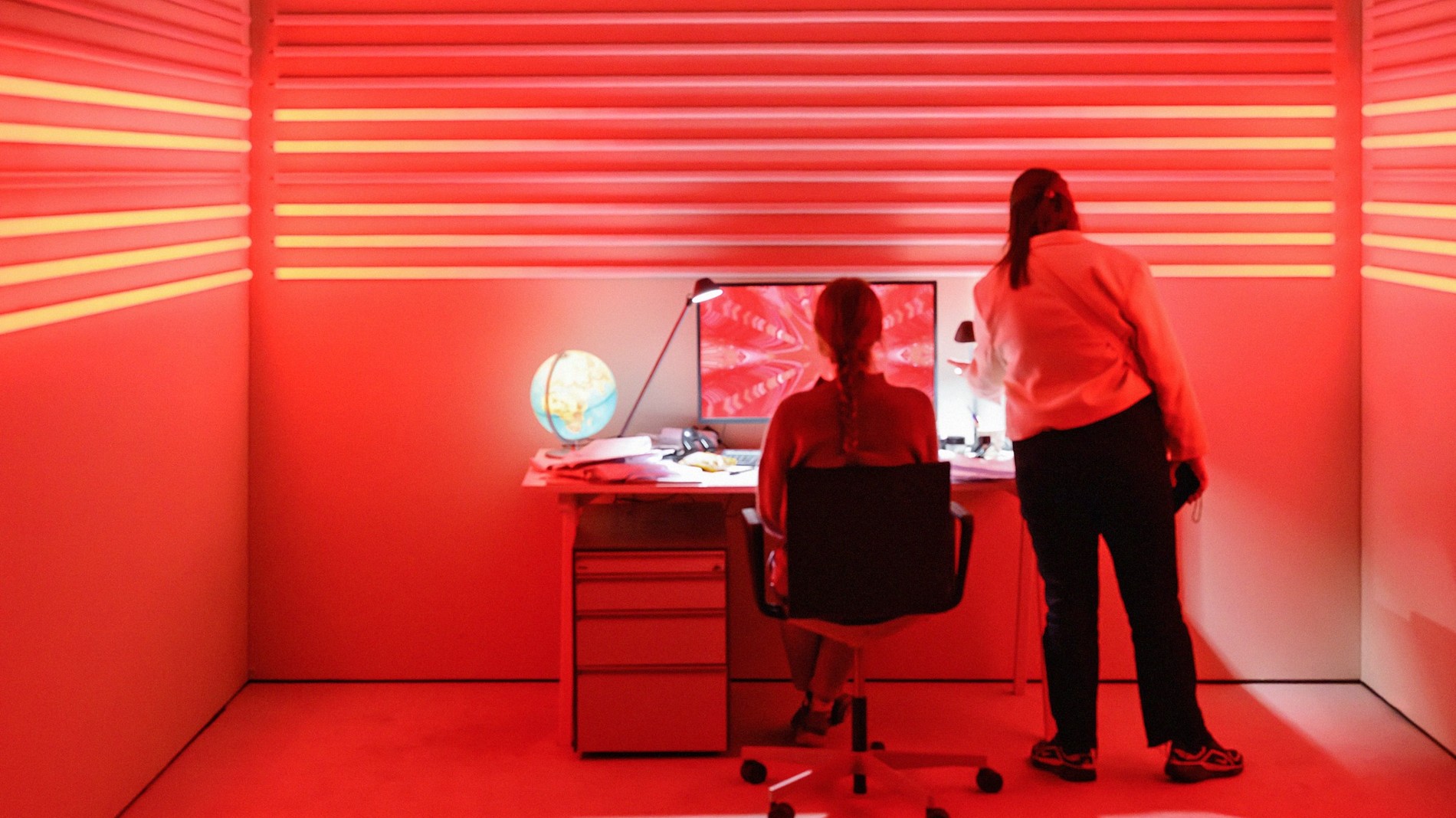
In the Work area, light took on a narrative function. A geometric, almost clinical space symbolized the phases of the working day: focused work in the morning, mental drift around midday, increasing pressure and acceleration in the afternoon, and a conscious winding down in the evening. Rhythm, intensity, and color of light made these states immediately perceptible.
Communication – the interplay of light and movement
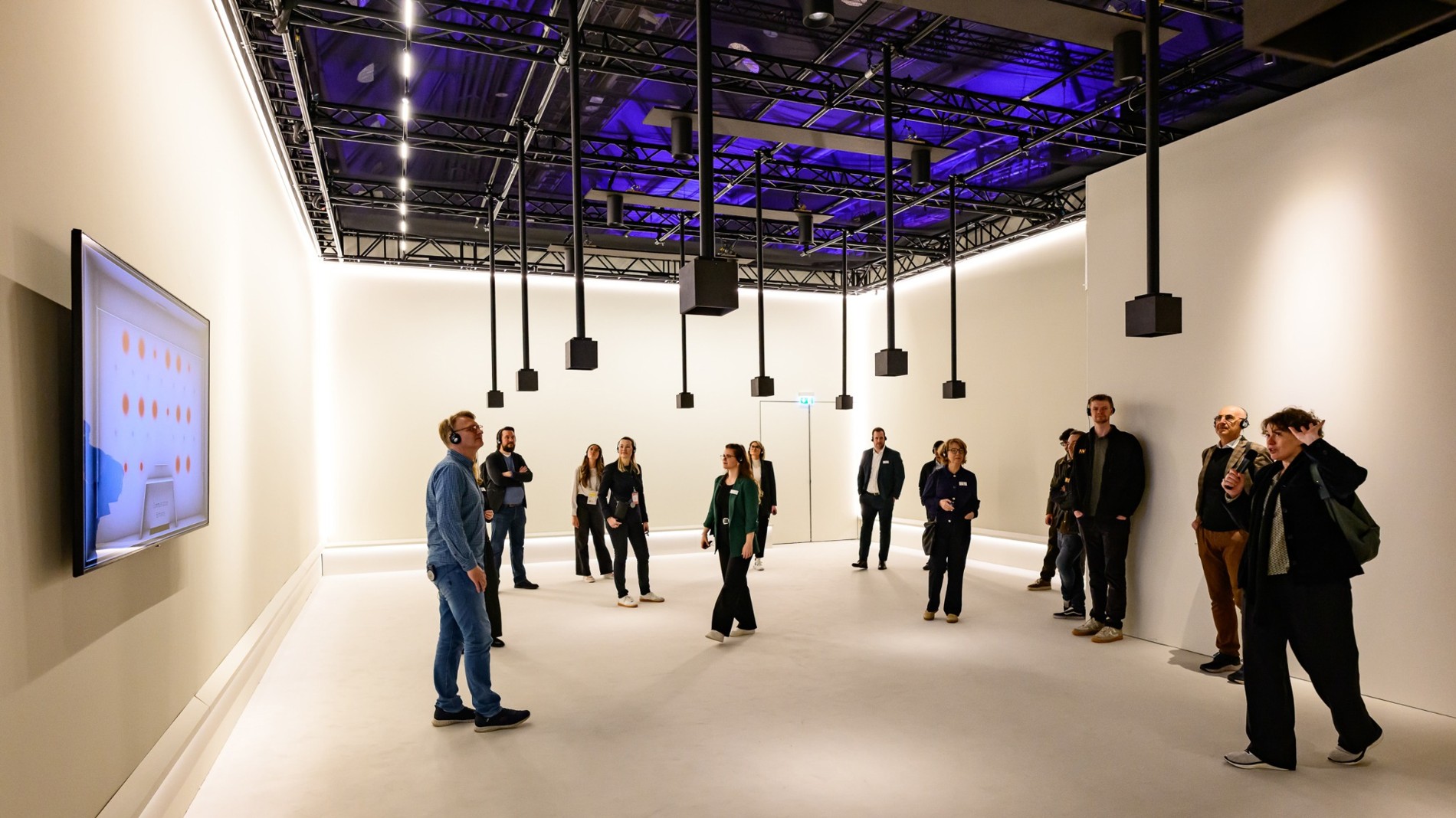
The Communication area illustrated how light, sensors, and interaction work together. Here, the lighting responded dynamically to visitors’ movements, transforming the space in real time. The installation showed how connected lighting systems can foster communication, enable interaction, and bring spaces to life.